
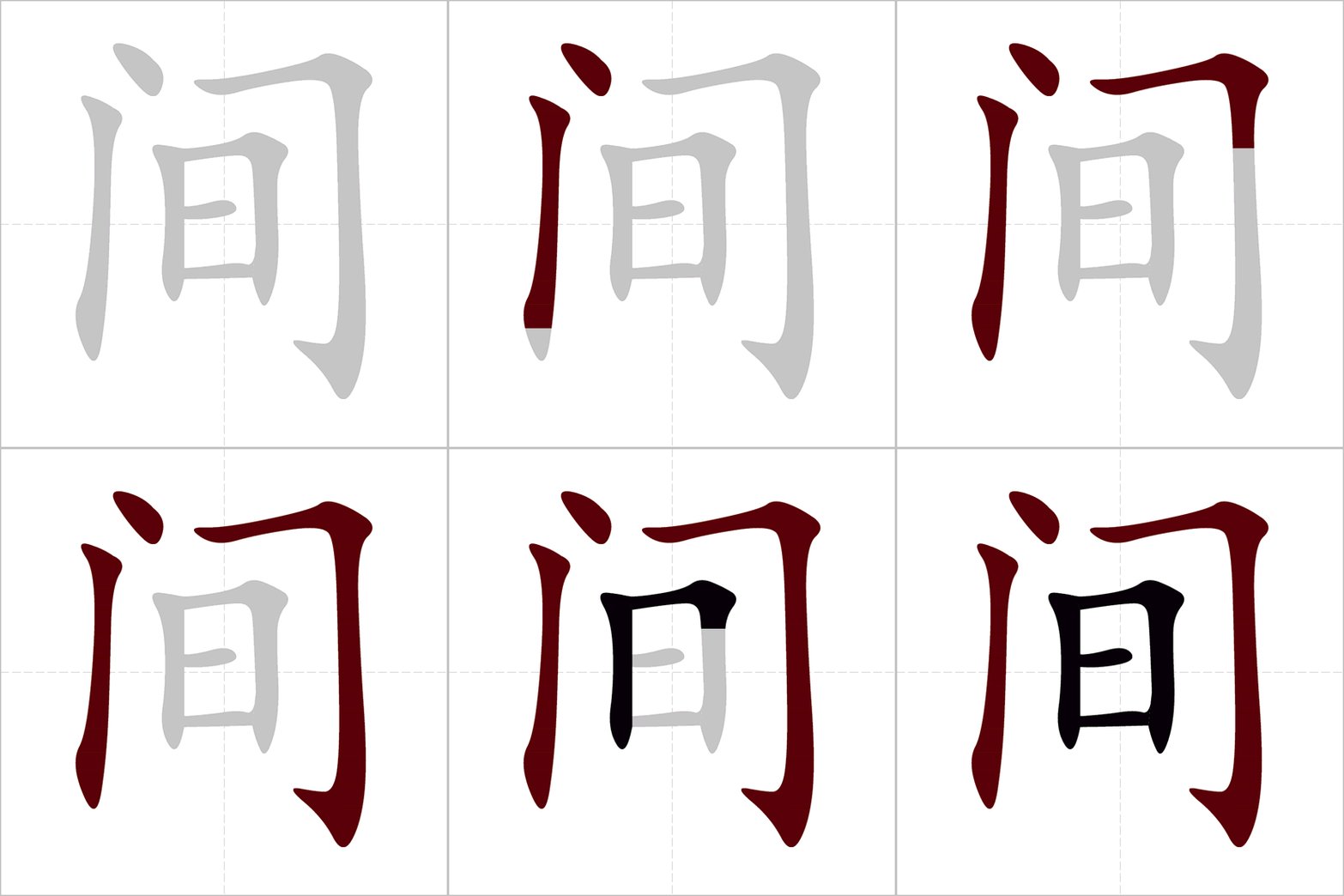
Understanding 时间 (shíjiān)
时间 is a fundamental noun meaning 'time' in Mandarin. It refers to a measurable period or moment and is used in both everyday and formal contexts. It can denote clock time, durations, or abstract concepts like the passage of time.
Common Uses
- Asking about specific clock times: "什么时间" (what time) is a frequent phrase.
- Referring to available free time or duration: "有时间" (have time), "需要时间" (need time).
- Talking about the passage of time: "时间过得真快" (time flies).
Collocations and Patterns
- 时间管理 (time management): used when discussing organizing or planning time.
- 合理安排时间 (arrange time reasonably): common advice for productivity.
- 时间就是金钱 (time is money): a popular proverb emphasizing time's value.
Usage Notes
时间 is neutral and widely used. It can be combined with measure words like "段" (a period of) or "个" (a general measure word) when specifying durations. Avoid confusing 时间 with 时刻 (shíkè), which refers more specifically to a precise moment or point in time.
Summary
Mastering 时间 helps learners discuss schedules, durations, and the abstract concept of time, making it essential for daily communication and planning.