
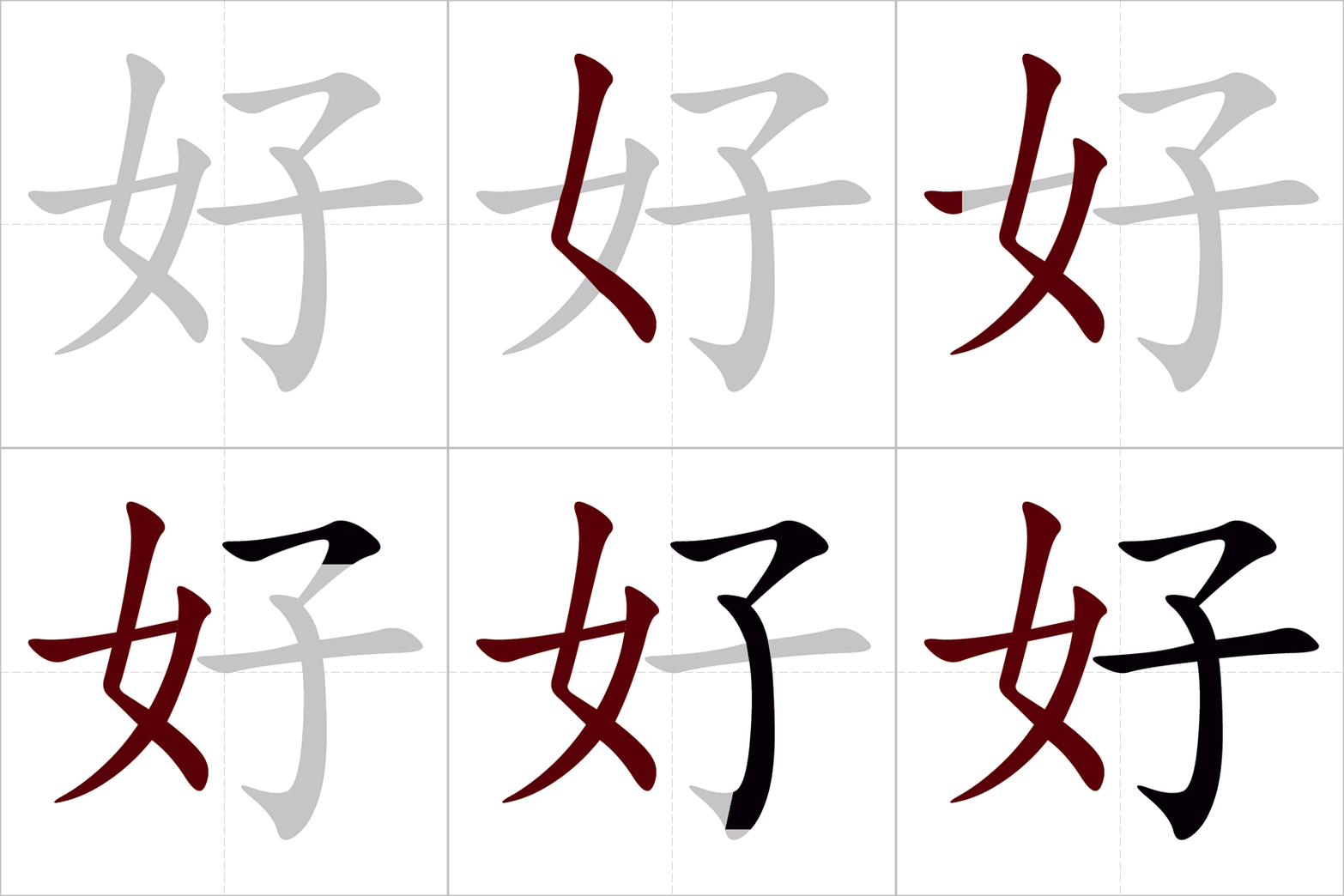
Usage of 只好
只好 is used to express a situation where there is no better alternative, so one must do something reluctantly or out of necessity. It often implies a sense of resignation or lack of options.
Common contexts
It frequently appears when describing forced decisions due to circumstances, such as bad weather, lack of resources, or unwillingness overridden by necessity.
Collocations and patterns
- 只好 + verb phrase: indicates the only possible action.
- Often used with verbs like 待 (stay), 借 (borrow), or 被迫 (be forced).
Nuance
Using 只好 conveys that the speaker is not enthusiastic about the action but accepts it as the only choice. It differs from simply stating a fact by emphasizing the lack of alternatives.
Common confusion
Don't confuse 只好 with 必须 (must) or 得 (have to), which are more neutral or stronger in obligation. 只好 carries a nuance of reluctance or resignation.