
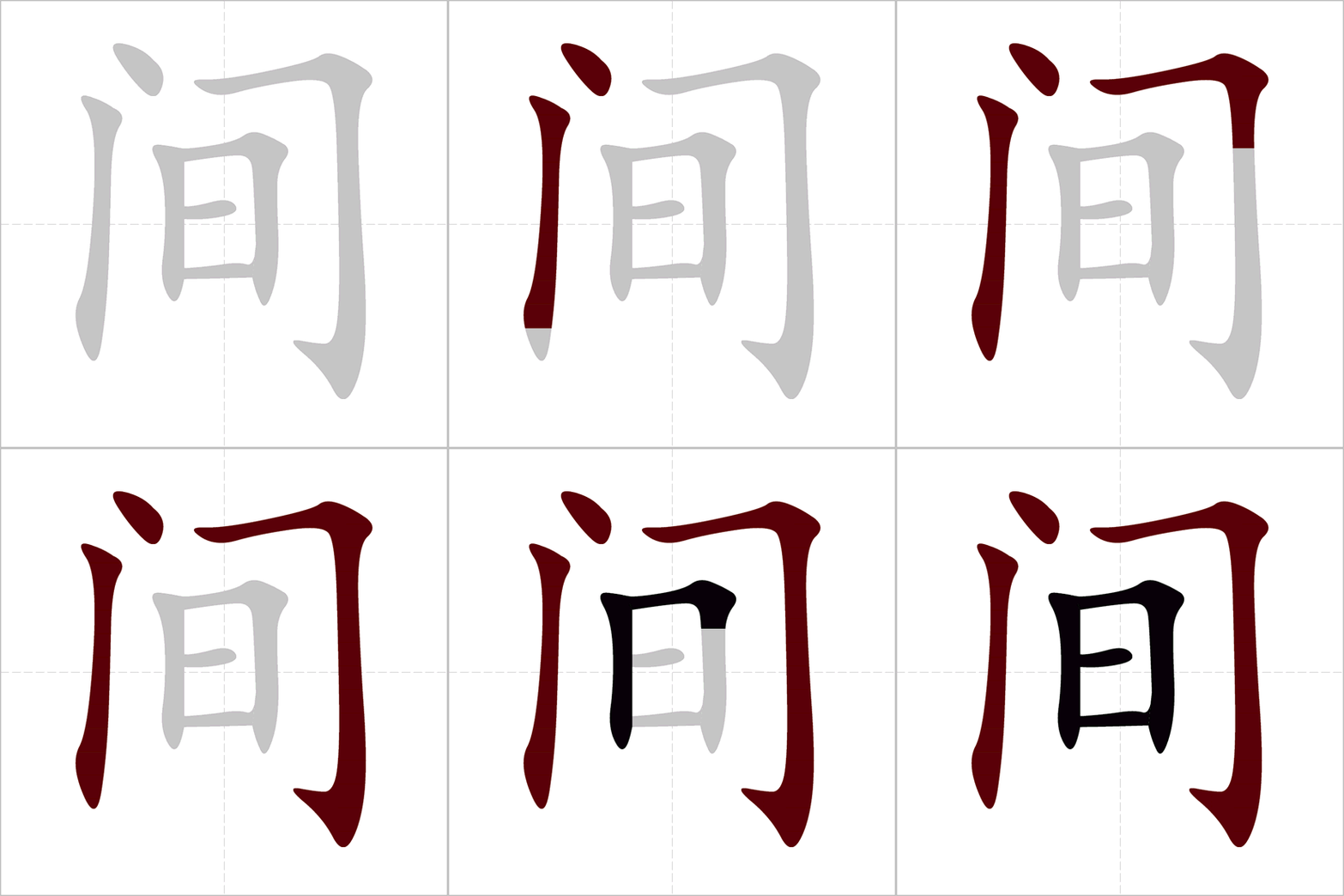
Usage of 期间
The word 期间 (qījiān) is a noun meaning 'period of time' or 'duration.' It is commonly used to specify a time frame during which an event or action takes place. It often appears in formal or semi-formal contexts such as announcements, instructions, or descriptions of events.
Common Collocations
- 考试期间 (kǎoshì qījiān): during the exam period
- 会议期间 (huìyì qījiān): during the meeting
- 假期期间 (jiàqī qījiān): during the holiday period
These collocations emphasize a specific bounded time frame.
Nuances and Usage Notes
期间 always refers to a defined span of time and is often used with verbs or phrases indicating actions or states occurring within that span. It is more formal than simply using time expressions like 时候 (shíhou). Unlike some temporal words, 期间 cannot be used alone as a temporal adverb; it usually follows a noun or phrase indicating the time frame.
Common Confusion
Do not confuse 期间 with 时间 (shíjiān), which means 'time' in a more general sense. 期间 emphasizes the boundedness of the time span, often with a start and end, while 时间 can be more abstract or continuous.