
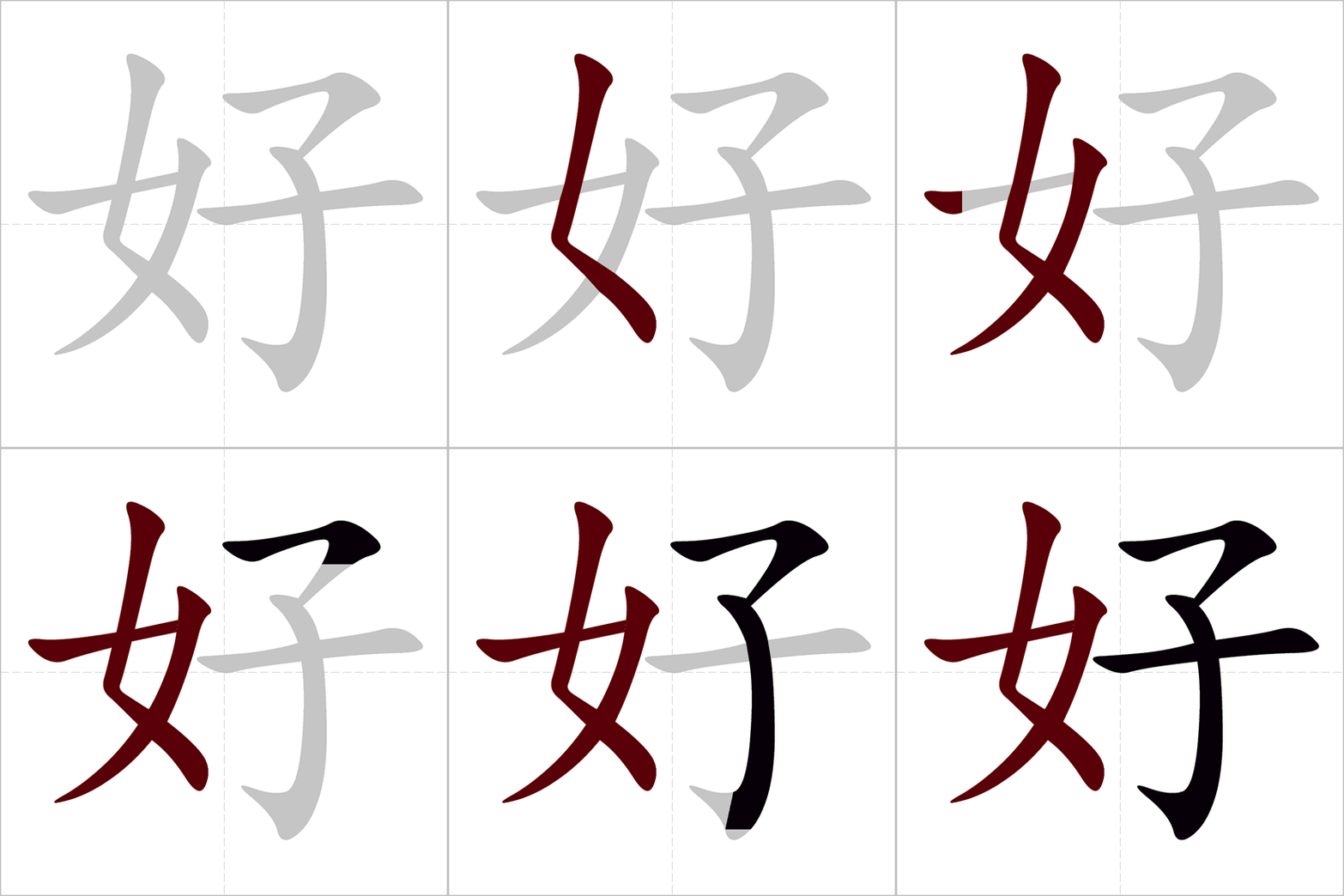
Usage of 也好
The phrase 也好 is commonly used to express that either of two or more options is acceptable or that a situation is tolerable regardless of specific details. It often appears in sentences where the speaker wants to indicate flexibility or indifference between alternatives.
Common contexts
Choice between alternatives: It can be used to show that it doesn't matter which option is chosen, e.g., “你去也好,我去也好” (Whether you go or I go).
Time flexibility: It can indicate that timing is not crucial, e.g., “明天去也好,后天去也好” (Going tomorrow or the day after tomorrow is fine).
Accepting different conditions: It can express acceptance of different circumstances, e.g., “他迟到也好,早到也好” (Whether he is late or early).
Common collocations
- 也好,也好: paired repetition to emphasize equal acceptability.
- A也好,B也好: structure to present two alternatives both acceptable.
Nuance and register
也好 is neutral and often used in spoken and written Mandarin to soften statements or show open-mindedness. It is more formal than casual slang but common in everyday conversation.
Avoiding confusion
Don’t confuse 也好 with 也许 (maybe) or 好吧 (okay). 也好 specifically conveys that multiple options or outcomes are equally acceptable rather than uncertainty or agreement.