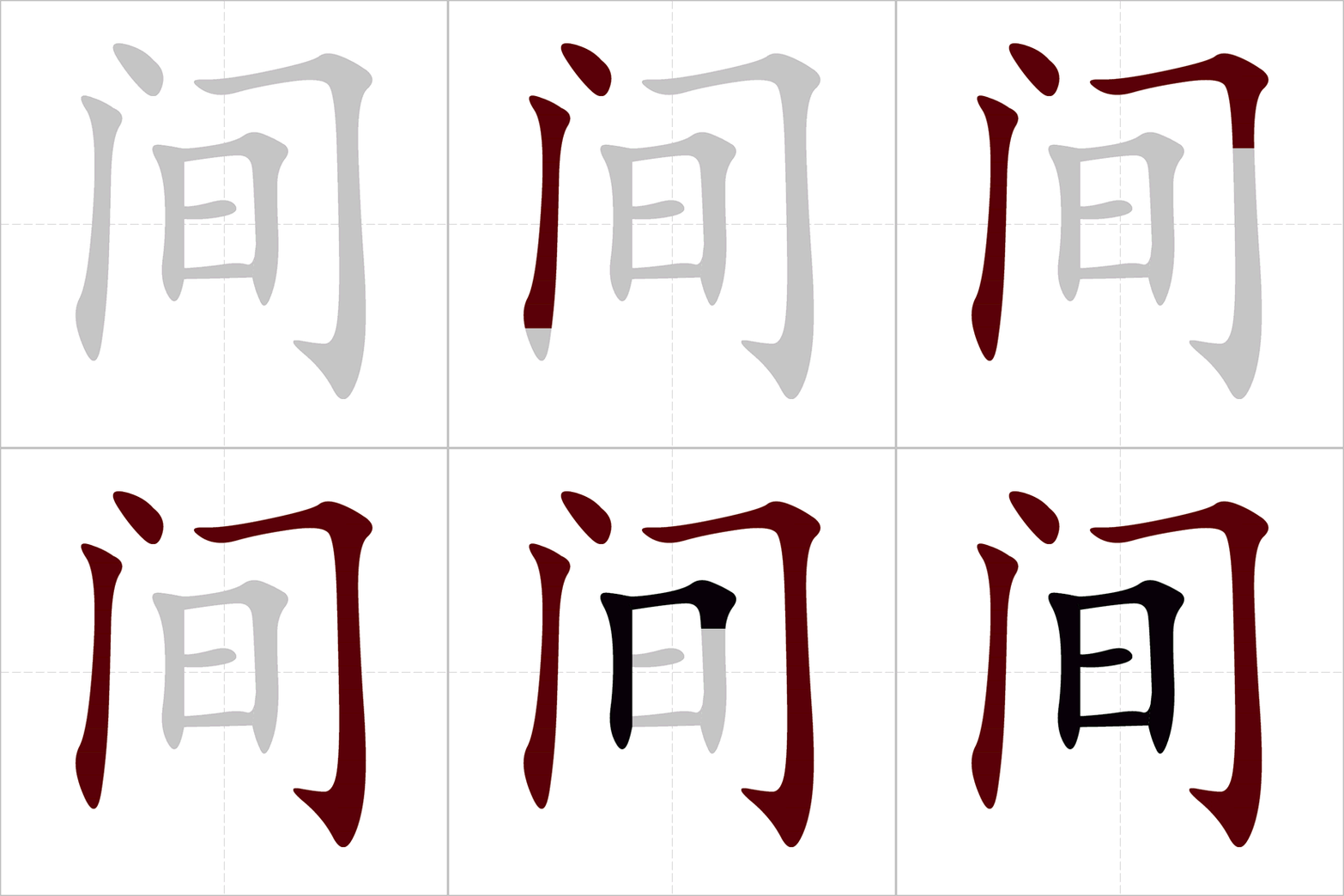

Meaning and Usage
"间隔" (jiàngé) primarily refers to a physical or temporal gap or interval between two points, objects, or events. It is commonly used to describe spatial distances (like between buildings or seats) and time intervals (such as between train departures).
Common Collocations
- "时间间隔" (time interval): used when discussing durations or intervals between events.
- "座位间隔" (seat spacing): often used in contexts requiring physical distancing.
- "间隔很大" (large gap): describes a significant physical or temporal distance.
Usage Notes
When using "间隔," the focus is on the measurable space or time separating two entities. It is more formal and precise than simply saying "距离" (distance) when referring to intervals. In spoken language, it often appears in contexts related to scheduling, safety measures, or spatial arrangements.
Common Confusion
"间隔" should not be confused with "隔开," which is a verb meaning "to separate" or "to partition." "间隔" is a noun referring to the gap or interval itself, not the action of creating it.