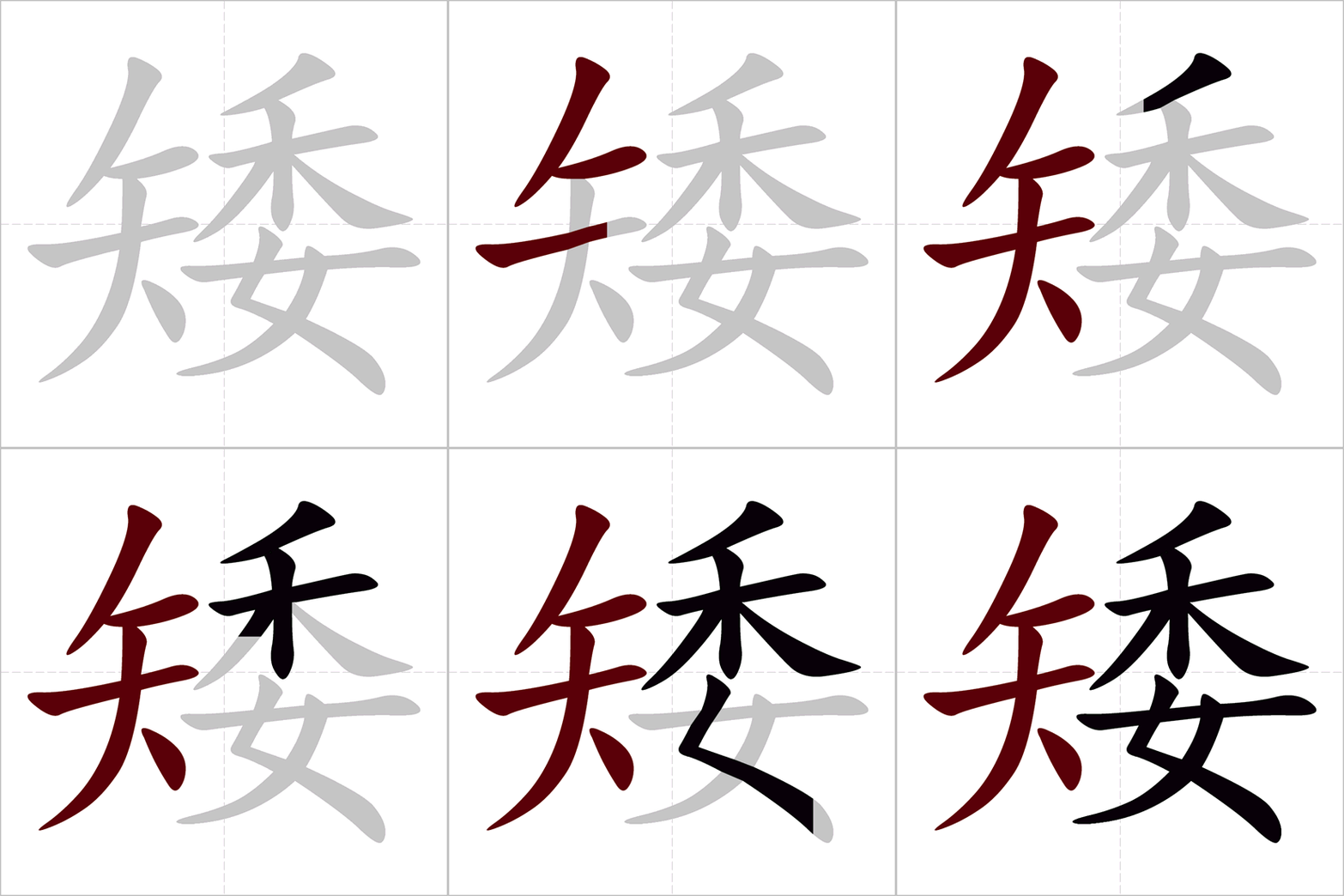
Meaning and Usage
The adjective 矮 (ǎi) primarily describes physical height or vertical dimension, meaning "short" or "low." It is commonly used to describe people, objects, or furniture that are shorter or lower than usual.
Common Collocations
- 个子矮 (gèzi ǎi): short stature, often used for people.
- 桌子矮 (zhuōzi ǎi): low table, describing furniture height.
Usage Notes
矮 is a neutral descriptive word but can be sensitive when referring to people’s height. It is polite to use it factually without negative tone. It contrasts with 高 (gāo), meaning "tall" or "high."
Common Confusions
Do not confuse 矮 with 矮小 (ǎixiǎo), which emphasizes both shortness and smallness, often with a slightly negative nuance. 矮 alone is straightforwardly about height or level.
Summary
Use 矮 to describe something or someone that is lower or shorter than average. It fits naturally in everyday conversation about physical characteristics or object dimensions.