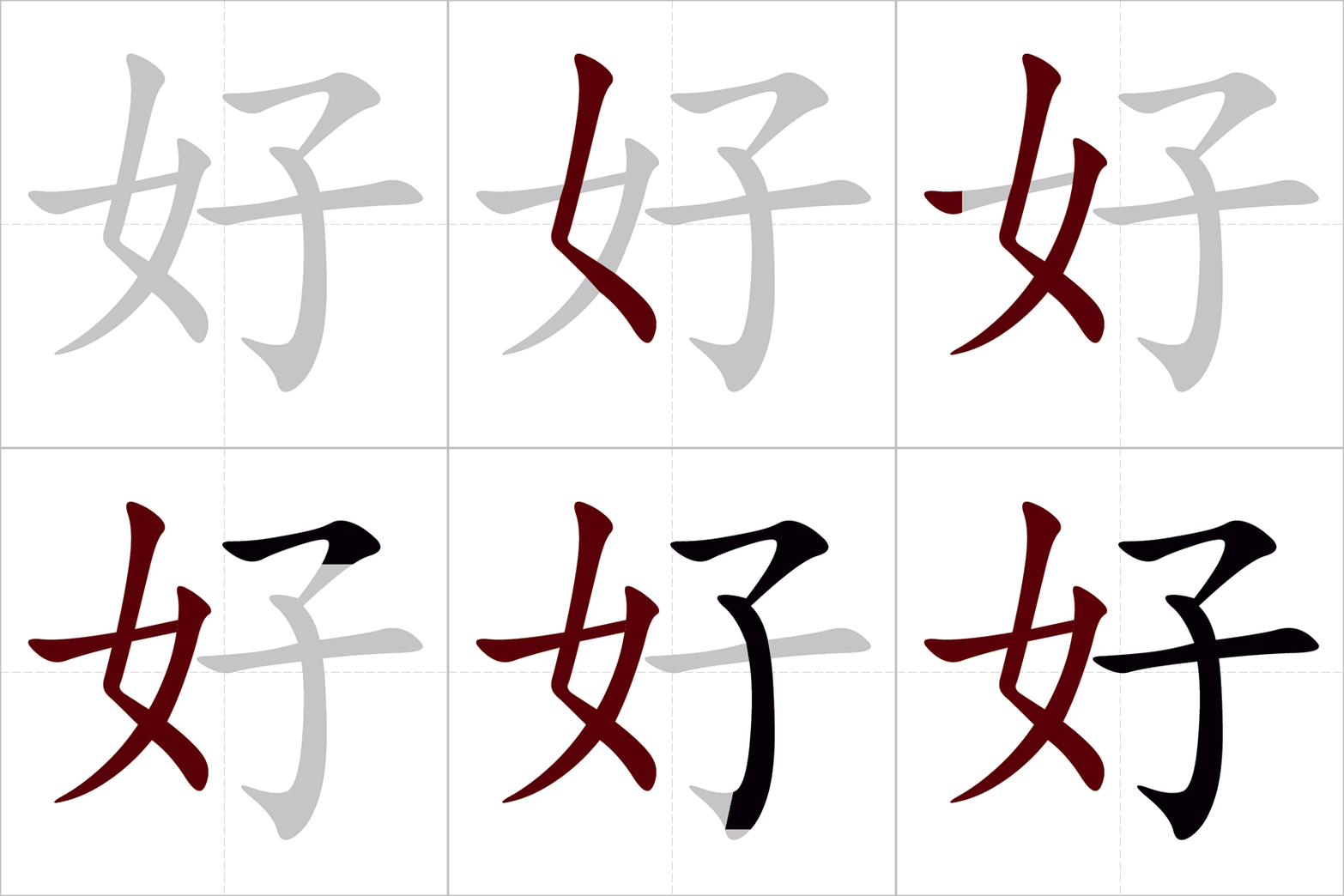

Usage of 好不
The phrase 好不 is often used to emphasize the degree of difficulty or intensity of an action or state. It can mean "barely," "with great difficulty," or "very." It is commonly paired with adjectives or verbs to highlight how hard or intense something is.
Common Collocations
- 好不容易 (hǎobù róngyì): "with great difficulty," "barely"
- 好不高兴 (hǎobù gāoxìng): "reluctantly," "not very happy"
- 好不热闹 (hǎobù rènào): "very lively"
These collocations show how 好不 modifies the following word to express strong feelings or difficulty.
Nuance and Register
好不 is somewhat formal and often appears in written or formal spoken Chinese. It conveys a sense of struggle or intensity and is not used casually like some other intensifiers. It can also express reluctance or a negative feeling when combined with certain adjectives.
Avoiding Confusion
Do not confuse 好不 with 好不好 (hǎobù hǎo), which is a question phrase meaning "Is it good or not?" 好不 is an adverbial intensifier, not a question.
Use 好不 when you want to stress how hard or intense something is, especially in formal or literary contexts.