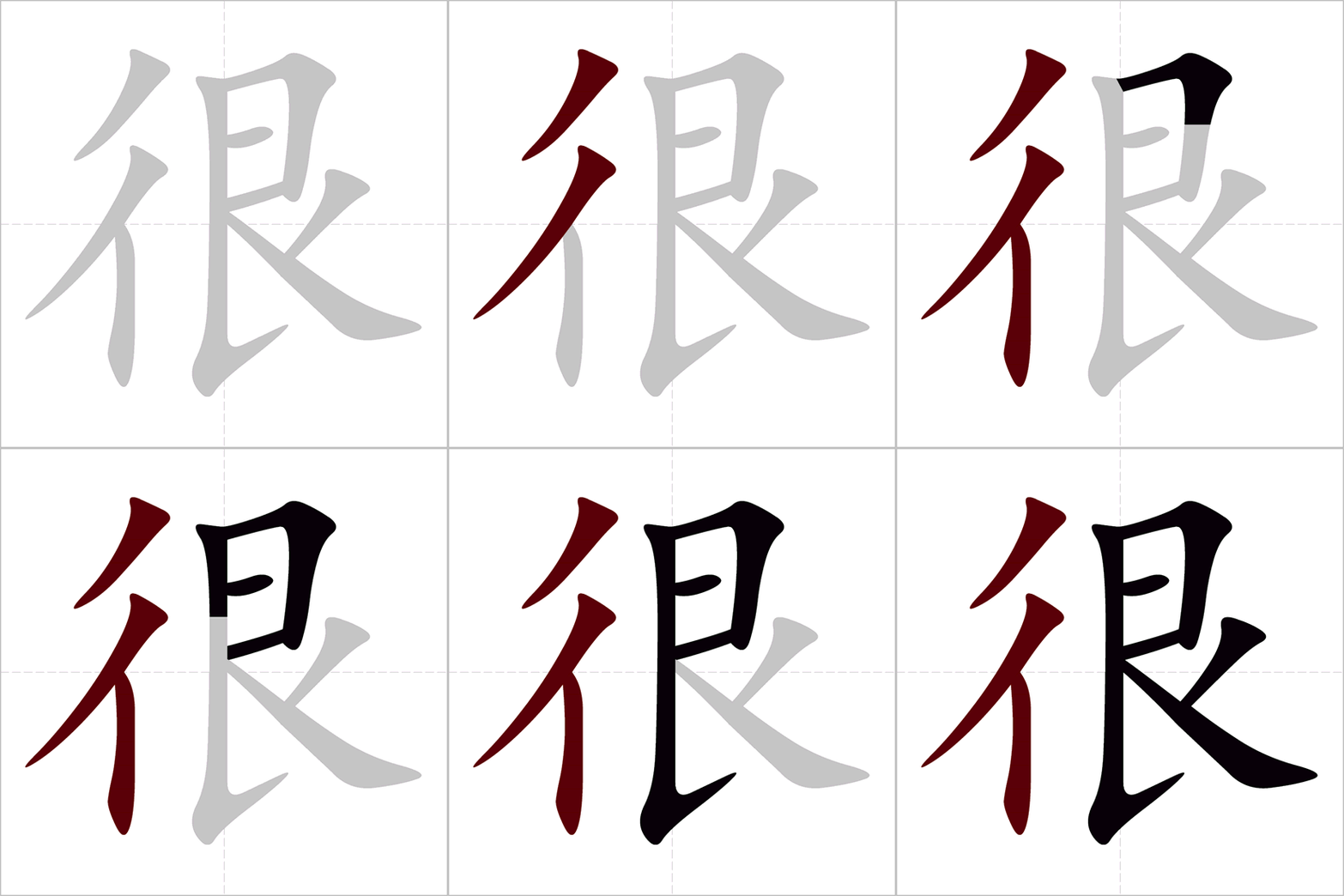
Usage of 很 as a Degree Adverb
The word 很 (hěn) is commonly used before adjectives to indicate degree, often translated as "very." However, in many cases, especially in spoken Mandarin, 很 does not carry a strong emphasis but serves as a grammatical marker to link the subject and adjective predicate smoothly. For example, 这个菜很好吃 (This dish is very delicious) uses 很 to connect the subject and adjective without necessarily implying an extreme degree.
Distinguishing 很 from Other Degree Adverbs
Unlike other adverbs like 非常 (fēicháng, very/extremely), 很 is milder and more neutral. It is also important to note that when 很 is omitted before an adjective, the adjective alone can imply a comparative meaning, such as in 他高 (He is tall [compared to others]). Adding 很 neutralizes this comparative implication, making the statement descriptive rather than comparative.
Common Collocations and Patterns
- 很 + adjective: the most common pattern to describe a quality (e.g., 很好, 很忙).
- 很 + adjective + 但是/不过 + contrast clause: to soften or balance statements (e.g., 他很高,但是不最高).
- 很 + adjective in negative sentences: maintains degree but can emphasize negation (e.g., 我不很累 is less common; usually 不很 is replaced by 不太).
Understanding 很’s subtle role helps learners avoid overusing it as a strong intensifier and use it naturally in everyday speech.