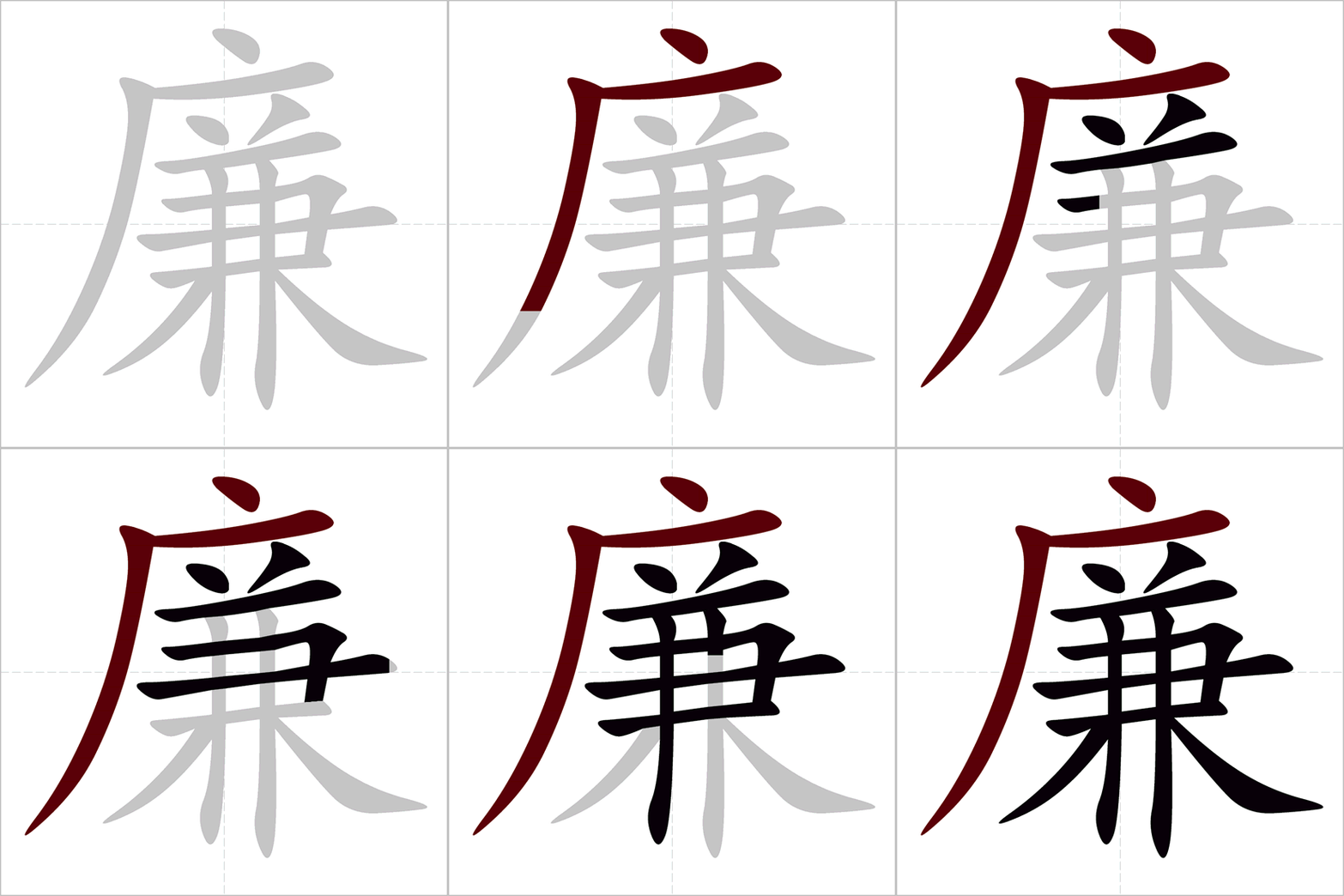

Meaning and Usage
The term 廉正 (liánzhèng) combines the ideas of honesty, integrity, and fairness. It is often used to describe people, especially officials or leaders, who act with moral uprightness and reject corruption.
Common Contexts
You will frequently encounter 廉正 in discussions about government, business ethics, and leadership qualities. It emphasizes both personal integrity and impartiality.
Collocations and Patterns
- 保持廉正 (bǎochí liánzhèng): to maintain integrity
- 廉正的官员 (liánzhèng de guānyuán): honest and fair officials
- 廉正著称 (liánzhèng zhùchēng): known for integrity
These collocations highlight the importance of consistent ethical behavior.
Nuances
Using 廉正 implies a high standard of moral conduct, often in contrast to corruption or unfairness. It is more formal and serious than simply saying someone is honest.
Common Confusion
Do not confuse 廉正 with 廉价 (cheap) or 正直 (upright). 廉正 specifically stresses incorruptibility and fairness, often in official or professional contexts.