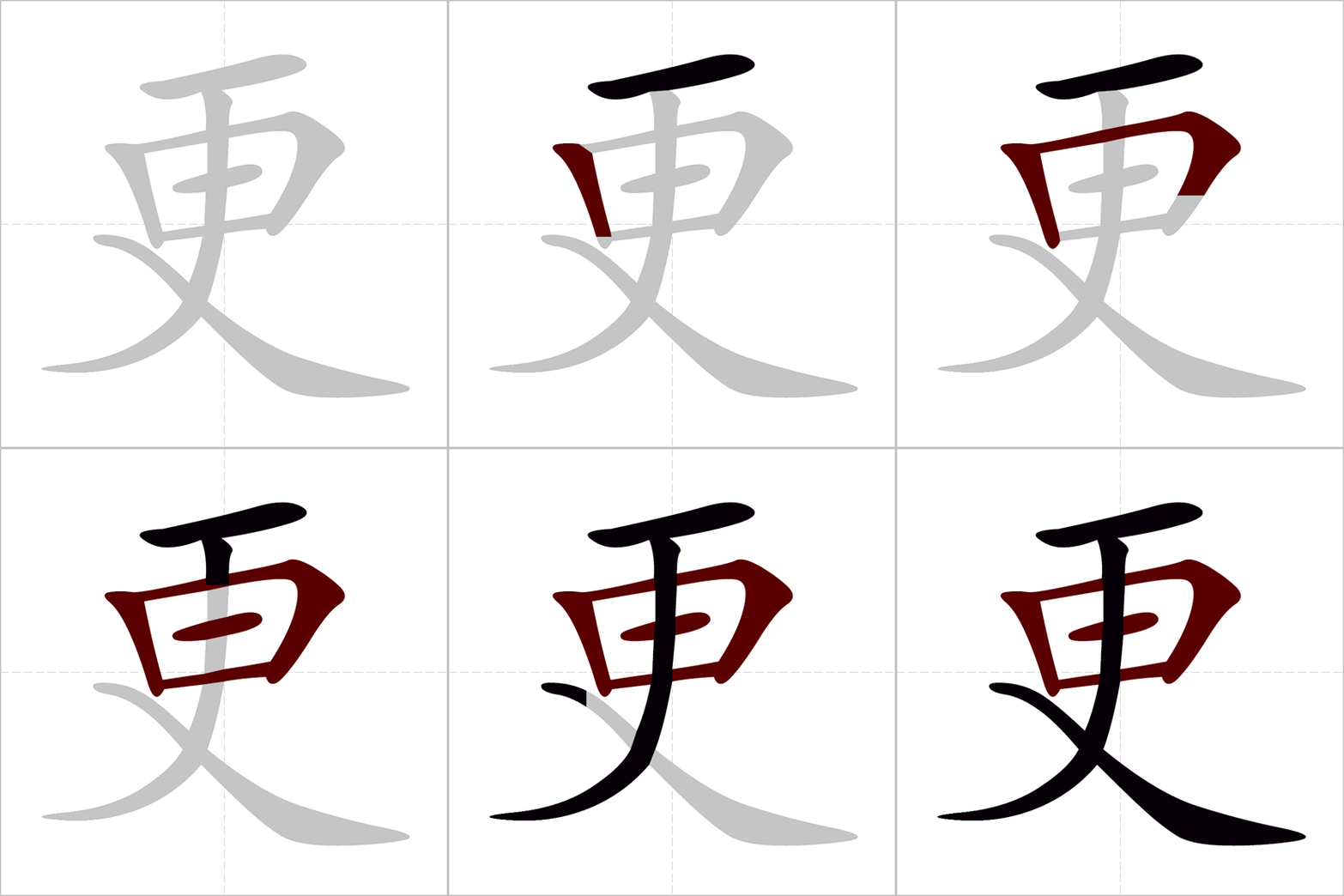
Usage of 更
The character 更 (gēng) has two main functions in Mandarin Chinese. First, it is used as an adverb meaning "more" or "even more," to indicate an increased degree or extent of something. For example, in sentences like "天气更冷了" (the weather is even colder), it emphasizes a comparative increase.
Second, 更 can function as a verb meaning "to change" or "to replace." This usage often appears in contexts involving swapping or upgrading items, such as "更换手机" (to replace a phone).
Common Collocations
- 更好 (gèng hǎo): better, used to express improvement.
- 更换 (gēnghuàn): to replace or change something.
- 更加 (gèngjiā): even more, used for emphasis.
Notes
When used as an adverb, 更 usually precedes adjectives or verbs to intensify their meaning. It is more formal and stronger than just using 很 (hěn). When used as a verb, it often appears in compound words like 更换. Avoid confusing 更 with 还 (hái), which also means "still" or "more," but has different nuances.
Understanding these uses will help learners use 更 naturally in both descriptive and action contexts.