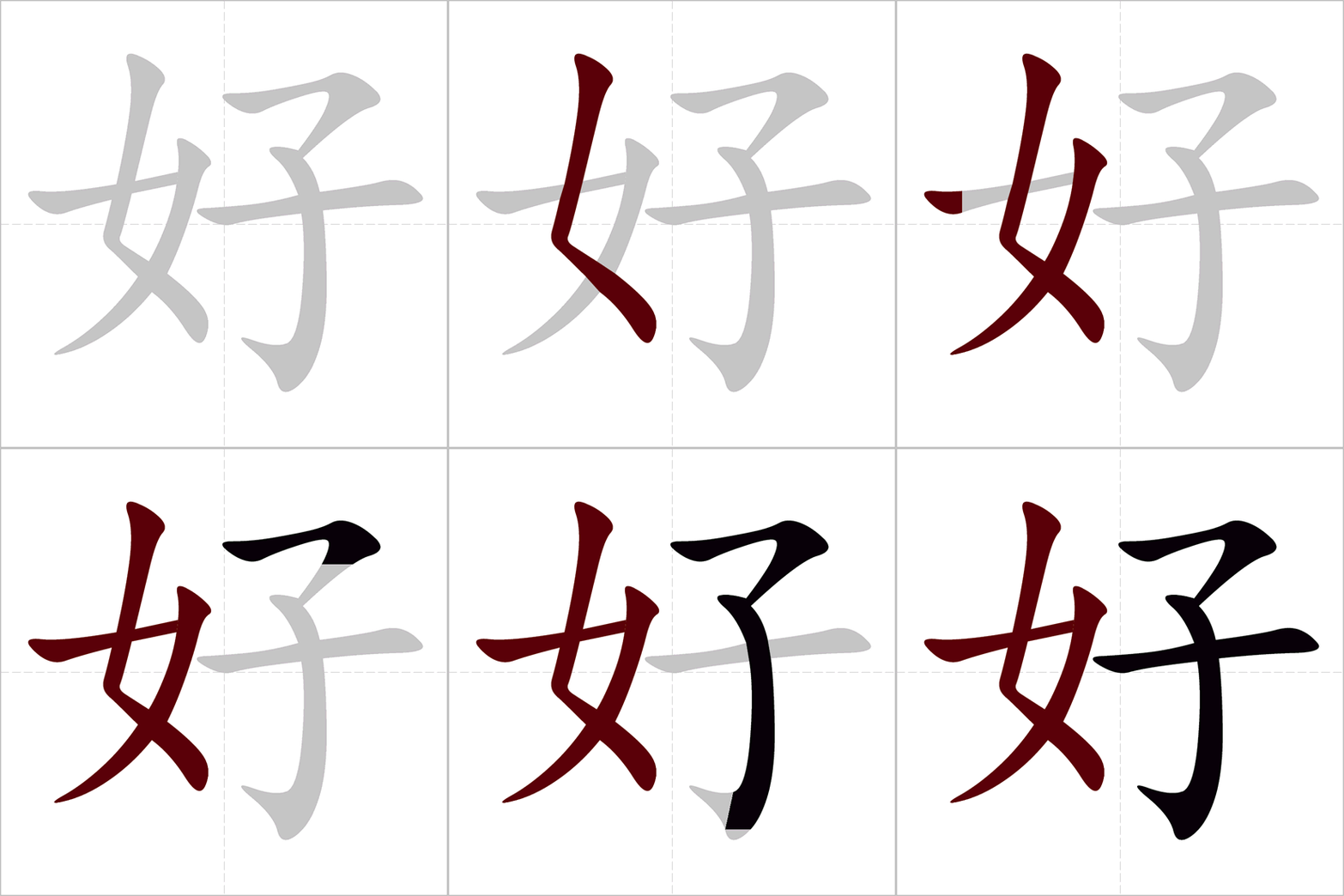

Meaning and Usage
"好看" (hǎokàn) primarily means "good-looking" or "attractive" and is commonly used to describe things that are visually pleasing, such as movies, clothes, or book covers. It can refer to both people and objects.
Common Contexts
- Describing visual appeal: "这件衣服很好看" (This piece of clothing looks good).
- Complimenting entertainment: "电影很好看" (The movie is enjoyable to watch).
- Talking about design or appearance: "封面设计很好看" (The cover design is attractive).
Collocations and Patterns
- 好看 + noun (e.g., 好看电影, 好看衣服): to describe something visually appealing.
- 很 + 好看: intensifies the attractiveness.
Notes
"好看" is often used in informal contexts and is a positive, casual compliment. It differs from "漂亮" (piàoliang), which is more often used for people’s physical beauty, while "好看" can be broader, including objects and performances. Avoid confusing "好看" with "好吃" (tasty) or "好听" (pleasant to hear), which describe other senses.