
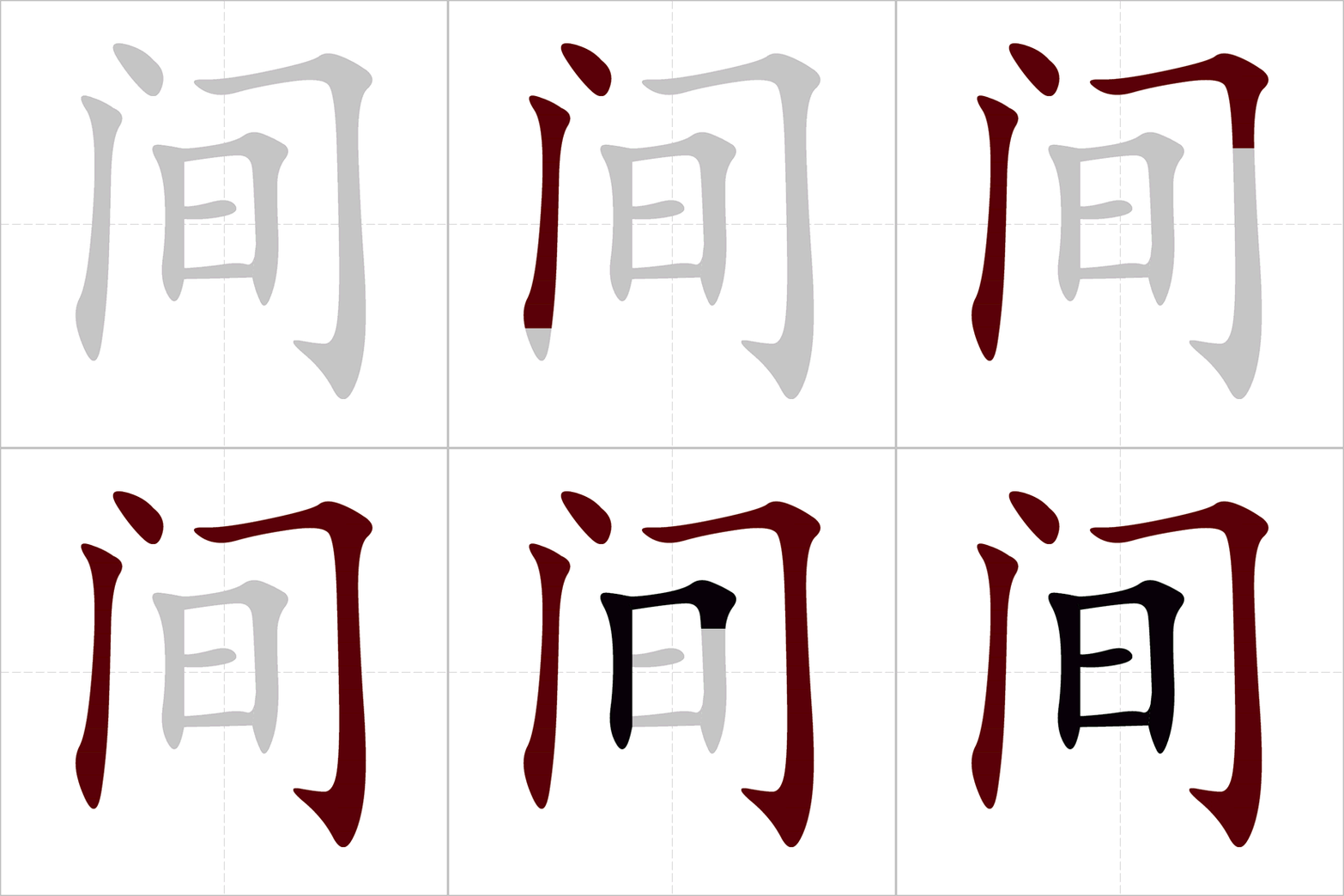
Usage of 中间
The word 中间 (zhōng jiān) primarily refers to the middle or center of a space, time, or sequence. It can indicate a physical location between two or more objects or people, or a temporal midpoint during an event.
Common contexts
- Physical location: Used to describe something or someone positioned centrally, e.g., "书架的中间" (middle of the bookshelf).
- Temporal midpoint: Refers to a break or event occurring in the middle of a process, e.g., "会议中间休息" (break in the middle of the meeting).
- Between two entities: Indicates the position between two people or things, e.g., "两个人的中间" (between two people).
Collocations and patterns
Nuances
中间 is neutral and widely used in both spoken and written Chinese. It is more specific than just saying 中 (middle) because it emphasizes the space or interval between things. Avoid confusing it with 中央, which often refers to a more formal or political center.
Common confusion
Do not confuse 中间 with 里面 (inside), which refers to the interior of something rather than the middle point or space between things.