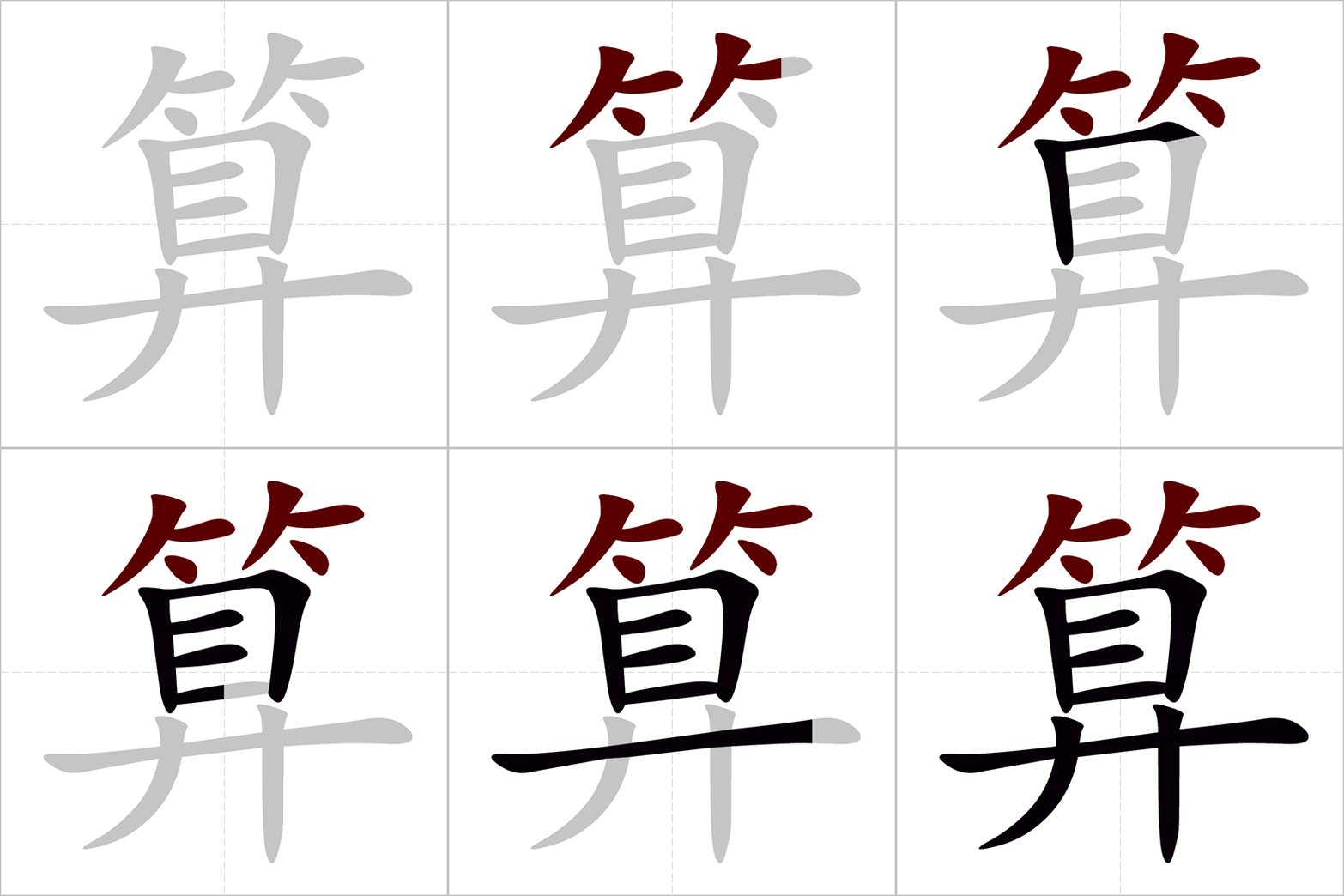

Understanding 算数
The word 算数 (suànshù) refers primarily to basic arithmetic — the fundamental operations of addition, subtraction, multiplication, and division. It is often used in educational contexts, especially when talking about elementary school math.
Usage and Nuance
算数 is more specific than the broader term 数学 (shùxué, mathematics). While 数学 covers all branches of math, 算数 focuses on simple calculations and number operations. When someone says they are learning 算数, it implies they are working on foundational math skills.
Common Collocations
- 学习算数 (xuéxí suànshù): to study arithmetic, often used in school contexts.
- 简单的算数题 (jiǎndān de suànshù tí): simple arithmetic problems.
- 掌握算数技巧 (zhǎngwò suànshù jìqiǎo): to master arithmetic skills.
Tips
Avoid confusing 算数 with 数学. Use 算数 when referring to basic calculations or elementary math, and 数学 for more advanced or general math topics. 算数 is usually neutral and suitable for formal and informal contexts alike.