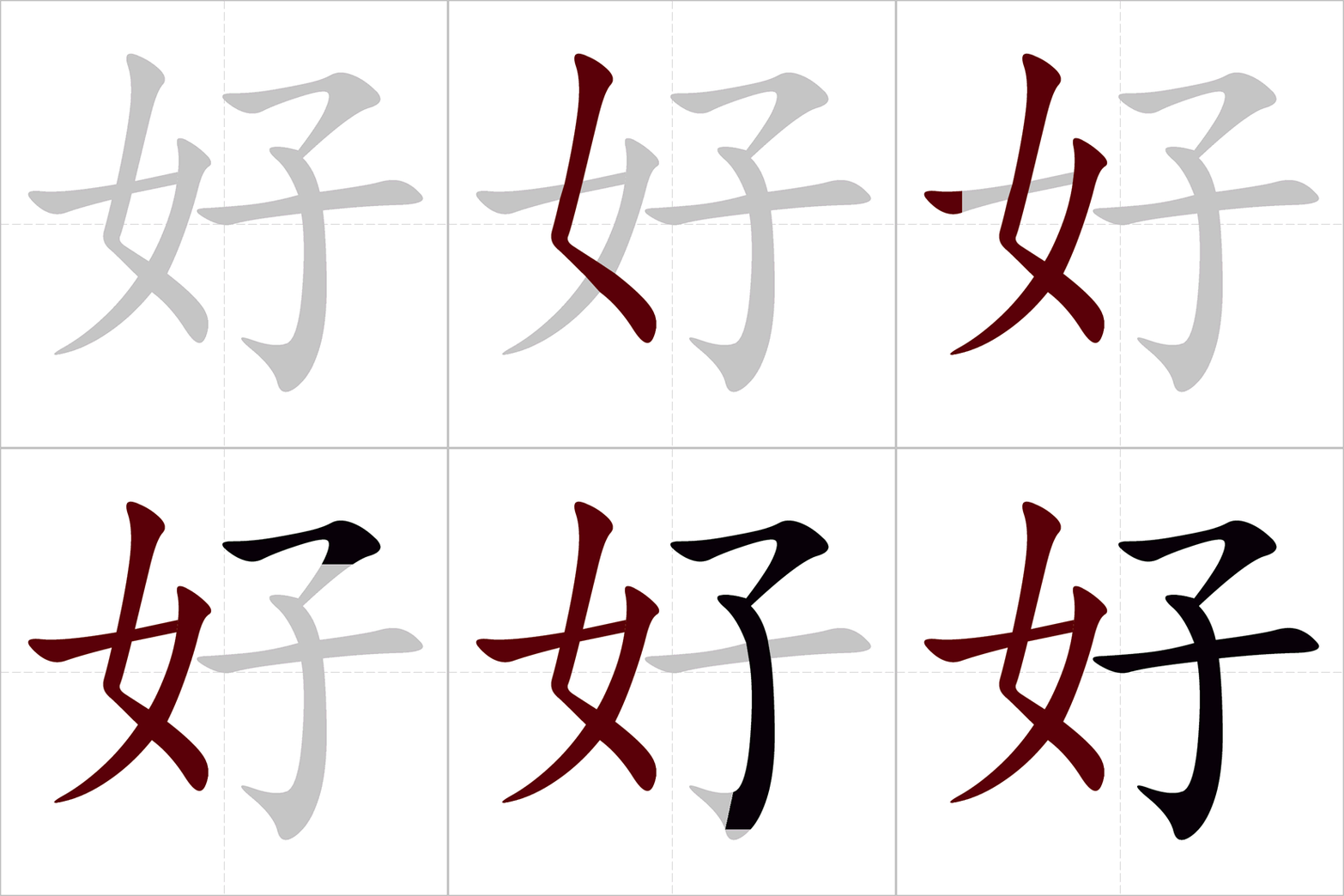

Usage of 好像
好像 is commonly used to express a guess or impression that something appears to be a certain way, similar to 'seems like' or 'as if' in English. It often introduces a subjective observation based on limited evidence.
Common contexts
It is frequently used to describe appearances, feelings, or situations that are not confirmed but inferred, such as someone's mood, weather conditions, or difficulty level.
Collocations and patterns
- 好像 + clause: to indicate something seems to be true
- 好像要 + verb: to express something is about to happen
Nuance and register
好像 is informal and neutral, suitable for everyday conversation. It conveys uncertainty or speculation without strong assertion.
Common confusion
Do not confuse 好像 with 似乎 (sìhū), which is more formal and often used in written language. 好像 is more colloquial and common in spoken Mandarin.