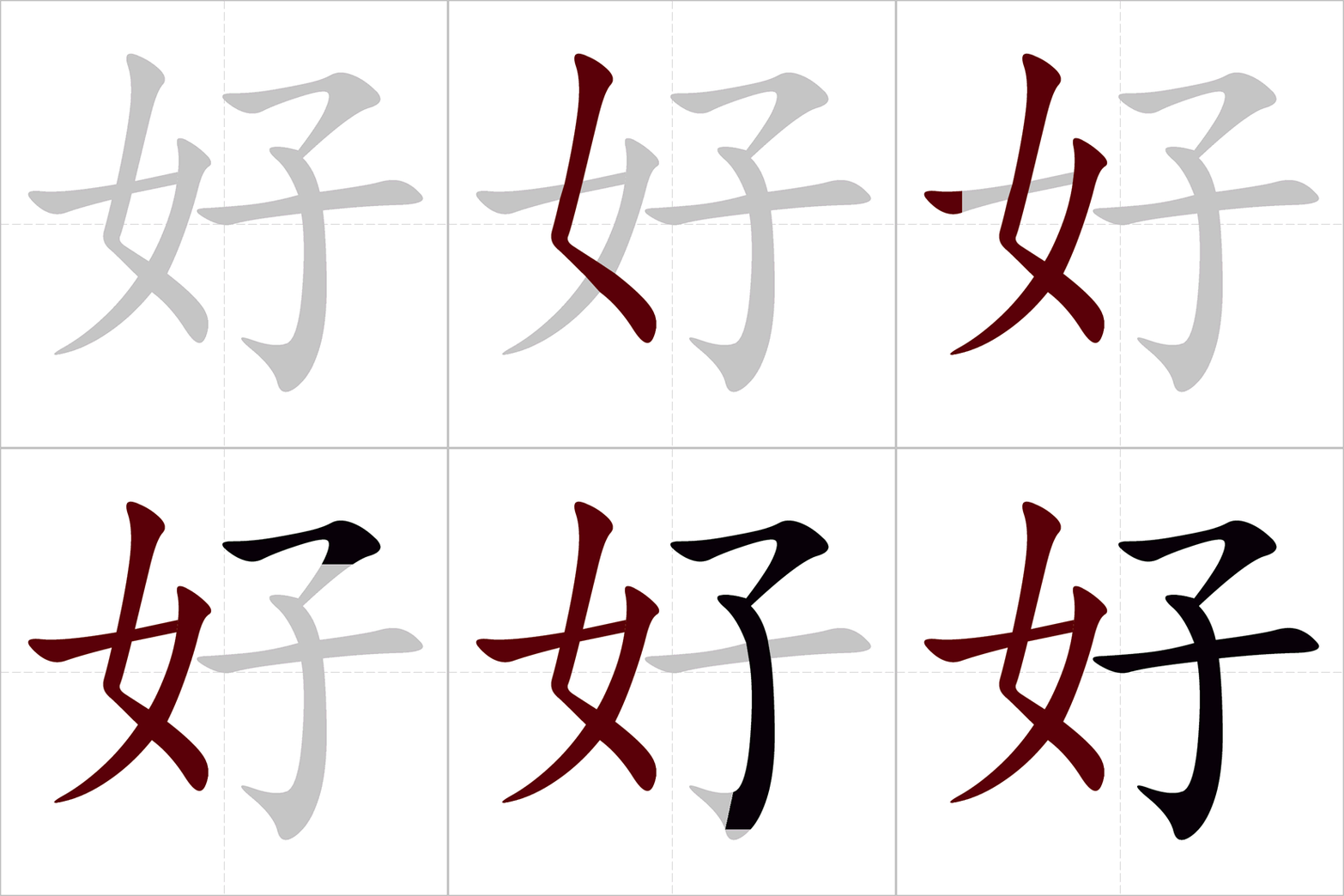

Usage of 好久
好久 is a common adverbial phrase meaning "a long time" or "for a long time." It is often used to describe a long duration since an event happened or to emphasize the length of time something has lasted.
Common contexts
- Talking about the time elapsed since last meeting someone: "好久没见了" (haven't seen for a long time).
- Referring to something that happened a long time ago: "好久以前" (a long time ago).
- Expressing that something hasn't happened or been done for a long time: "好久没吃了" (haven't eaten for a long time).
Collocations and patterns
- 好久没 + verb: indicates not having done something for a long time.
- 好久以前: a long time ago.
- 好久不见: long time no see, a common greeting.
Nuances
好久 emphasizes the length of time and often carries a nostalgic or emotional tone, especially in greetings or reminiscing. It is informal and widely used in spoken Mandarin.
Common confusion
Don't confuse 好久 with 久 alone; 好久 is more colloquial and often used in everyday speech, while 久 can appear in more formal or literary contexts.