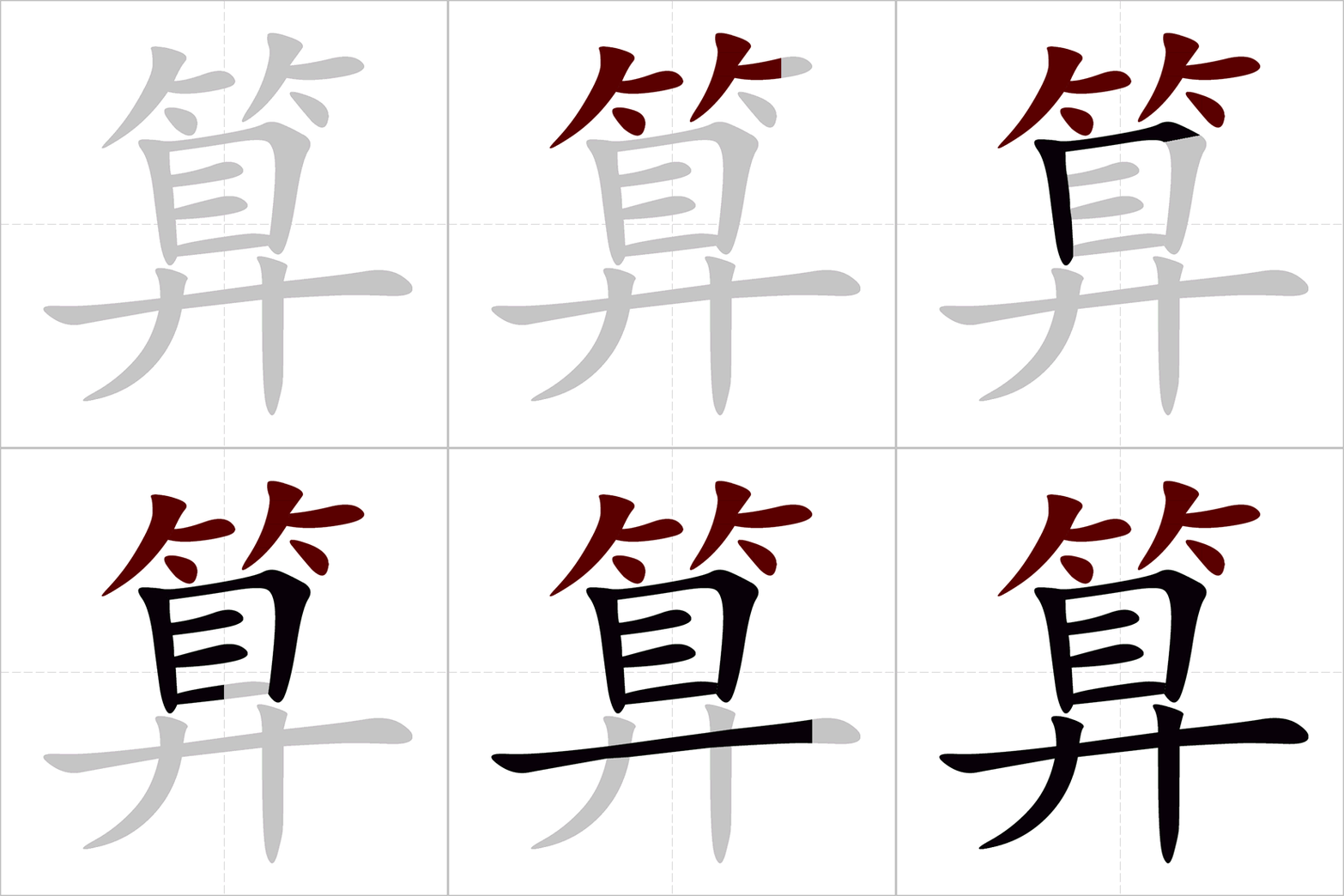

Usage of "算是"
"算是" is a common phrase used to express that something can be regarded or considered as a certain state or category, often with some reservation or approximation. It implies that while the classification may not be perfect or absolute, it is acceptable or close enough.
Nuance and Context
When using "算是," speakers often suggest a moderate or somewhat tentative judgment rather than a definitive statement. It can soften the assertion, making it less forceful than a direct "是" (is).
Common Collocations
- 算是通过 (suàn shì tōngguò): considered passed
- 算是成功 (suàn shì chénggōng): regarded as successful
- 算是朋友 (suàn shì péngyǒu): considered friends
These collocations show how "算是" is used to categorize or evaluate people, events, or results with some flexibility.
Register and Tone
"算是" is neutral and suitable for both spoken and written Mandarin. It is often used in everyday conversation to express a balanced or modest evaluation.
Common Confusion
Do not confuse "算是" with "就是" which is more emphatic and definitive. "算是" carries a nuance of approximation or partial agreement, while "就是" asserts certainty.