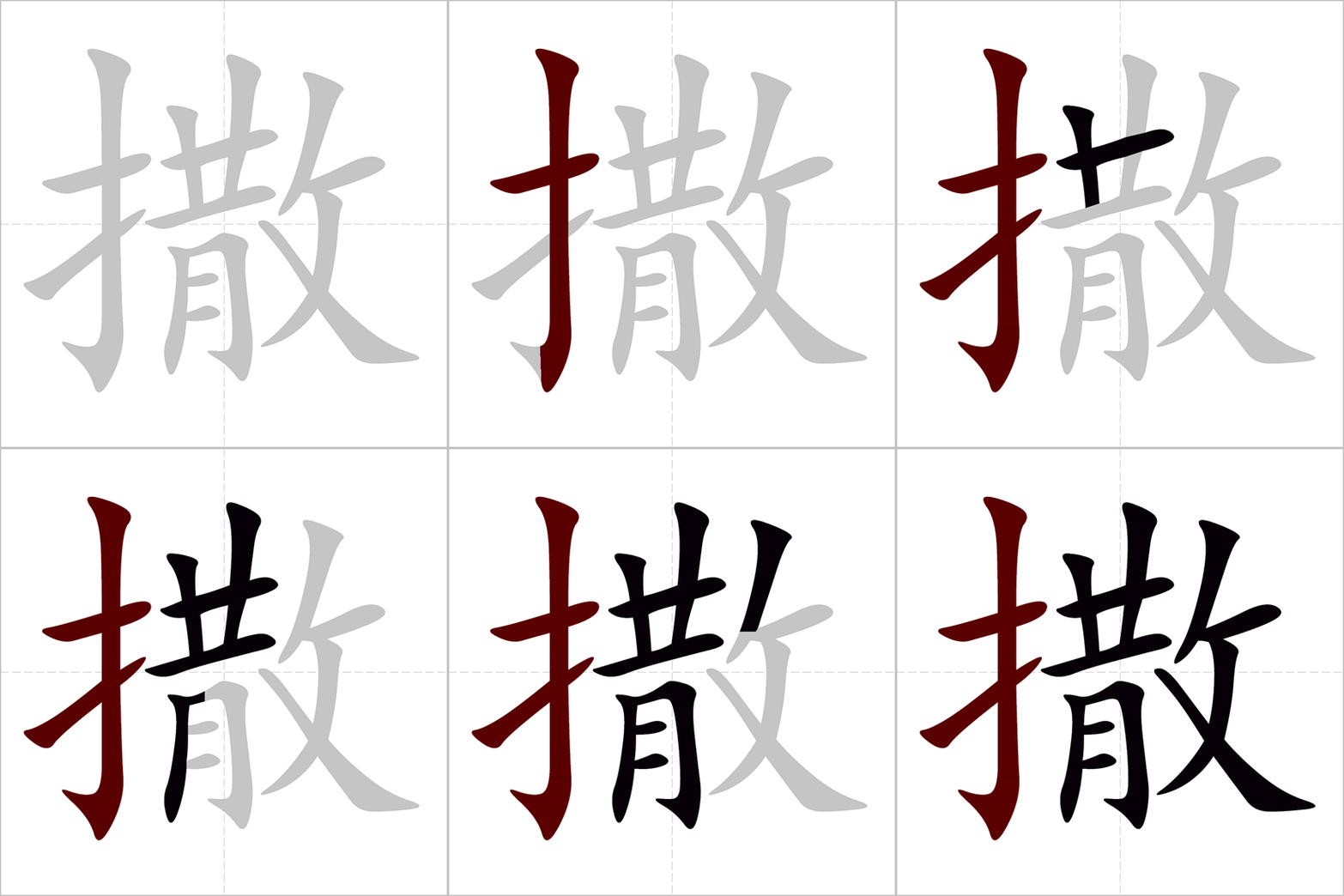
Usage and Nuances of 撒 (sǎ)
The character 撒 primarily means "to scatter" or "to sprinkle," often used when talking about spreading seeds, salt, or other small particles. It can also mean "to let go" or "to relax," especially in colloquial expressions where someone releases tension or behaves freely.
Common Collocations
- 撒种 (sǎ zhǒng): to sow seeds, used in agricultural contexts.
- 撒欢儿 (sā huānr): to romp or frolic happily, often describing children or animals.
- 撒谎 (sā huǎng): to tell a lie, a fixed phrase where 撒 means "to spread" lies.
Register and Tone
撒 is a neutral verb, suitable for both formal and informal contexts depending on collocation. When used in idiomatic expressions like 撒谎, it is very common in daily speech.
Common Confusion
Don't confuse 撒 with 洒 (sǎ), which also means "to sprinkle" but is more often used with liquids. 撒 is more about scattering solids or figurative release.
Understanding 撒 helps learners describe actions involving scattering or releasing, and recognize idiomatic uses in everyday conversation.