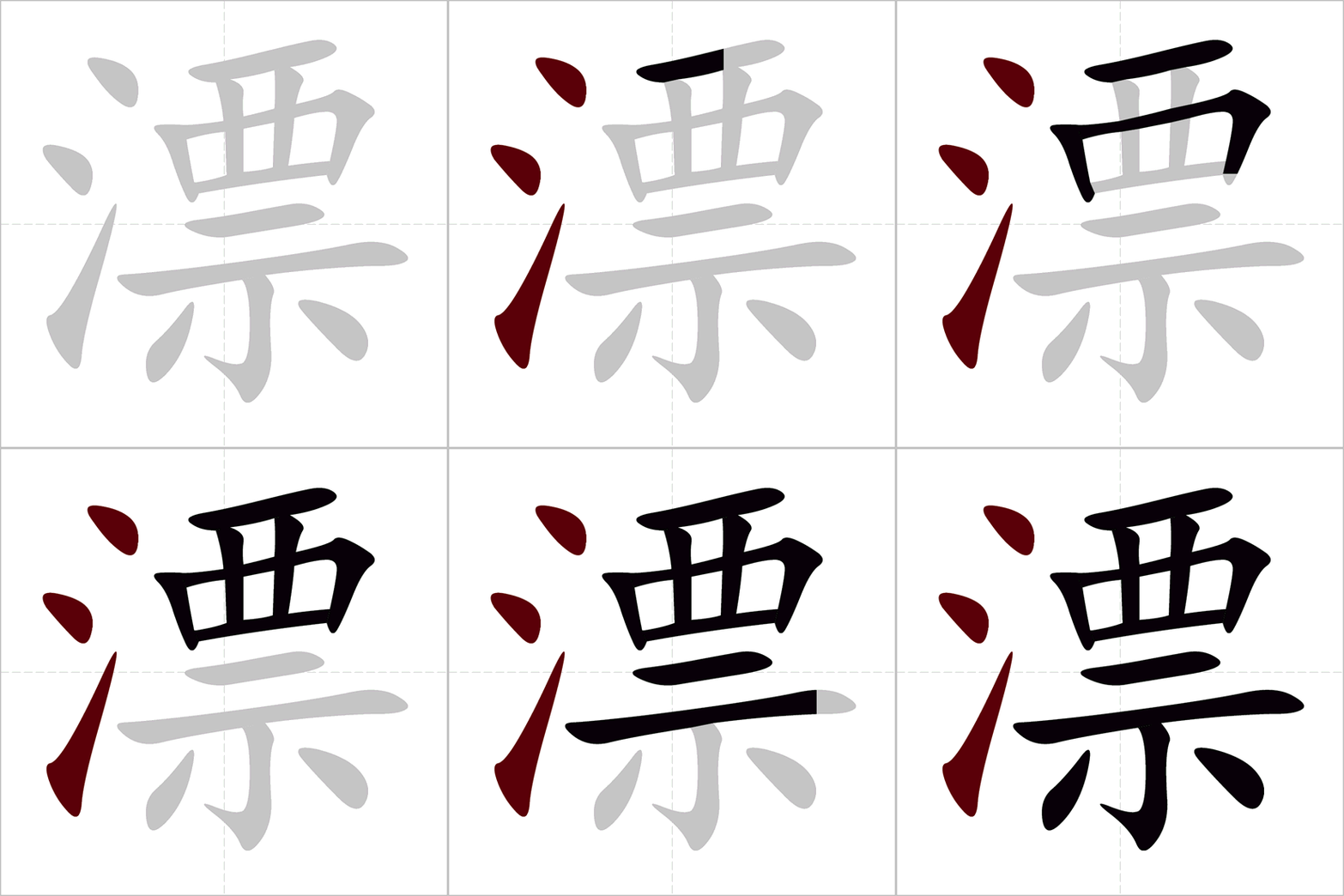

Meaning and Usage
"漂浮" (piāo fú) primarily means "to float" or "to drift" on a surface, especially water. It describes objects or substances that are buoyant and move gently with currents or wind.
Common Contexts
You will often see "漂浮" used to describe boats, debris, or natural elements like leaves floating on water. It can also be used metaphorically to describe emotions or states that are unstable or unsettled.
Collocations and Patterns
- 漂浮在水面 (piāofú zài shuǐmiàn): floating on the water surface, a common phrase for objects on water.
- 漂浮物 (piāofú wù): floating objects or debris.
- 心情漂浮 (xīnqíng piāofú): mood is unsettled or drifting, used metaphorically.
Nuances
"漂浮" emphasizes gentle, natural movement without control, unlike "浮" alone which can be more general. It is often used in literary or descriptive contexts rather than casual speech.
Common Confusion
Do not confuse "漂浮" with "浮现" (to emerge or appear), which has a different meaning. "漂浮" always relates to floating or drifting physically or metaphorically.