

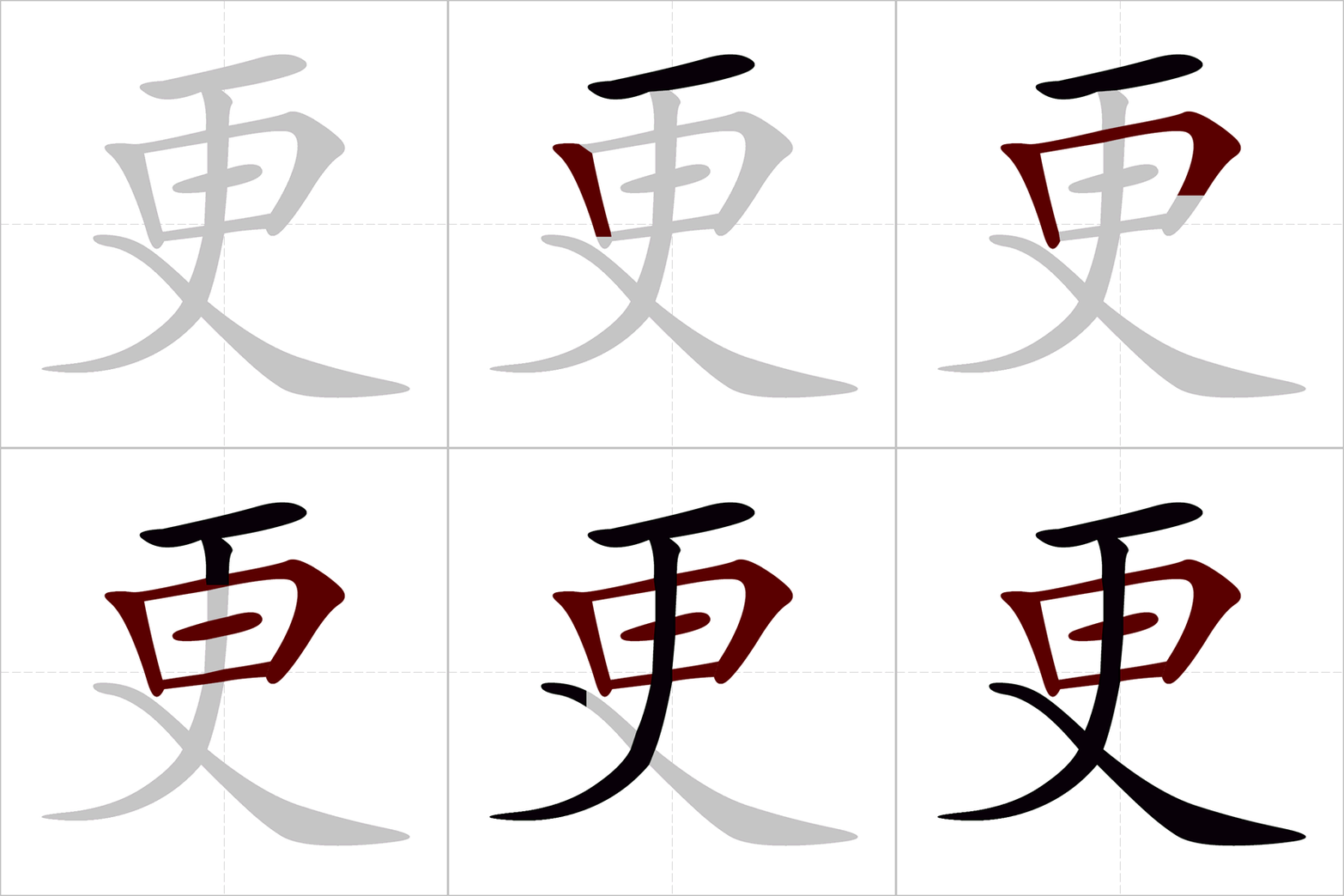

Meaning and Usage
"自力更生" is an idiom that emphasizes solving problems or achieving progress through one's own efforts without relying on external help. It is often used in political, economic, or personal contexts to highlight independence and self-sufficiency.
Common Contexts
This phrase is frequently used when discussing national development strategies, personal growth, or overcoming difficulties. It carries a positive connotation of resilience and determination.
Collocations and Patterns
- 自力更生 + 发展 (develop through self-reliance): used when talking about economic or industrial growth.
- 坚持自力更生 (insist on self-reliance): emphasizes a firm commitment to independence.
- 依靠自力更生 (rely on self-reliance): stresses dependence on one's own strength rather than outside aid.
Nuances
Using 自力更生 implies a proactive attitude and pride in one's own capabilities. It contrasts with relying on external support or assistance. Avoid confusing it with phrases that mean simply "to survive" or "to live," as 自力更生 specifically highlights self-driven regeneration or improvement.