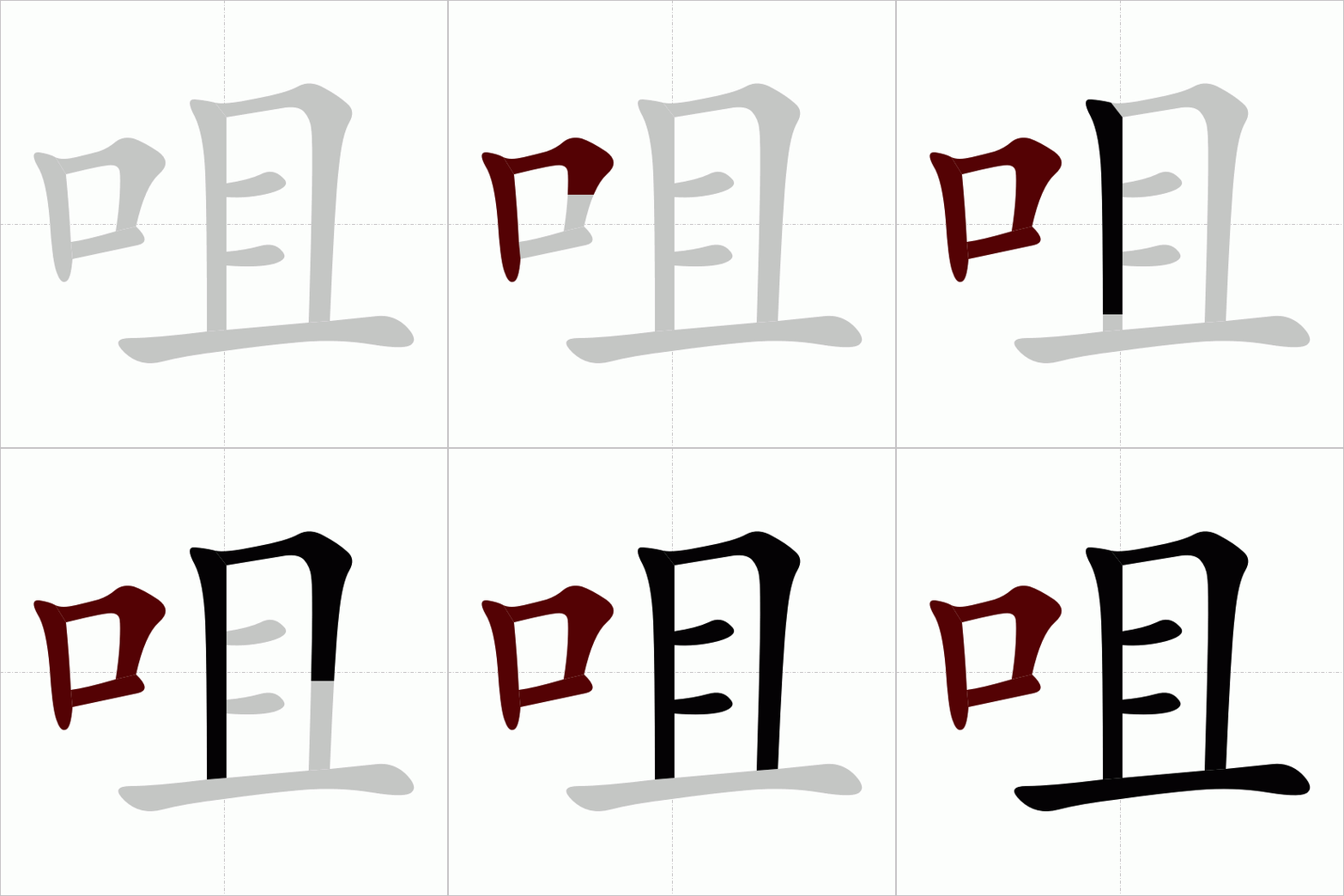

Usage and Nuances
The word "咀嚼" primarily means "to chew" in the literal sense, referring to the physical act of breaking down food in the mouth. However, it is also frequently used metaphorically to describe the process of carefully thinking over or analyzing ideas, texts, or problems.
Common Collocations
- 咀嚼食物 (to chew food): the basic, literal use.
- 咀嚼观点 (to mull over ideas): used when reflecting deeply on someone's opinions or arguments.
- 反复咀嚼 (to repeatedly mull over): emphasizes careful and repeated consideration.
Register and Tone
"咀嚼" is a formal or literary term, often found in written language or formal speech rather than casual conversation. When used metaphorically, it conveys a thoughtful, deliberate attitude.
Common Confusion
Do not confuse "咀嚼" with simpler verbs like "嚼" or "吃". "咀嚼" often implies a more thorough or reflective process, especially in metaphorical contexts, whereas "嚼" is more casual and "吃" simply means "to eat."