
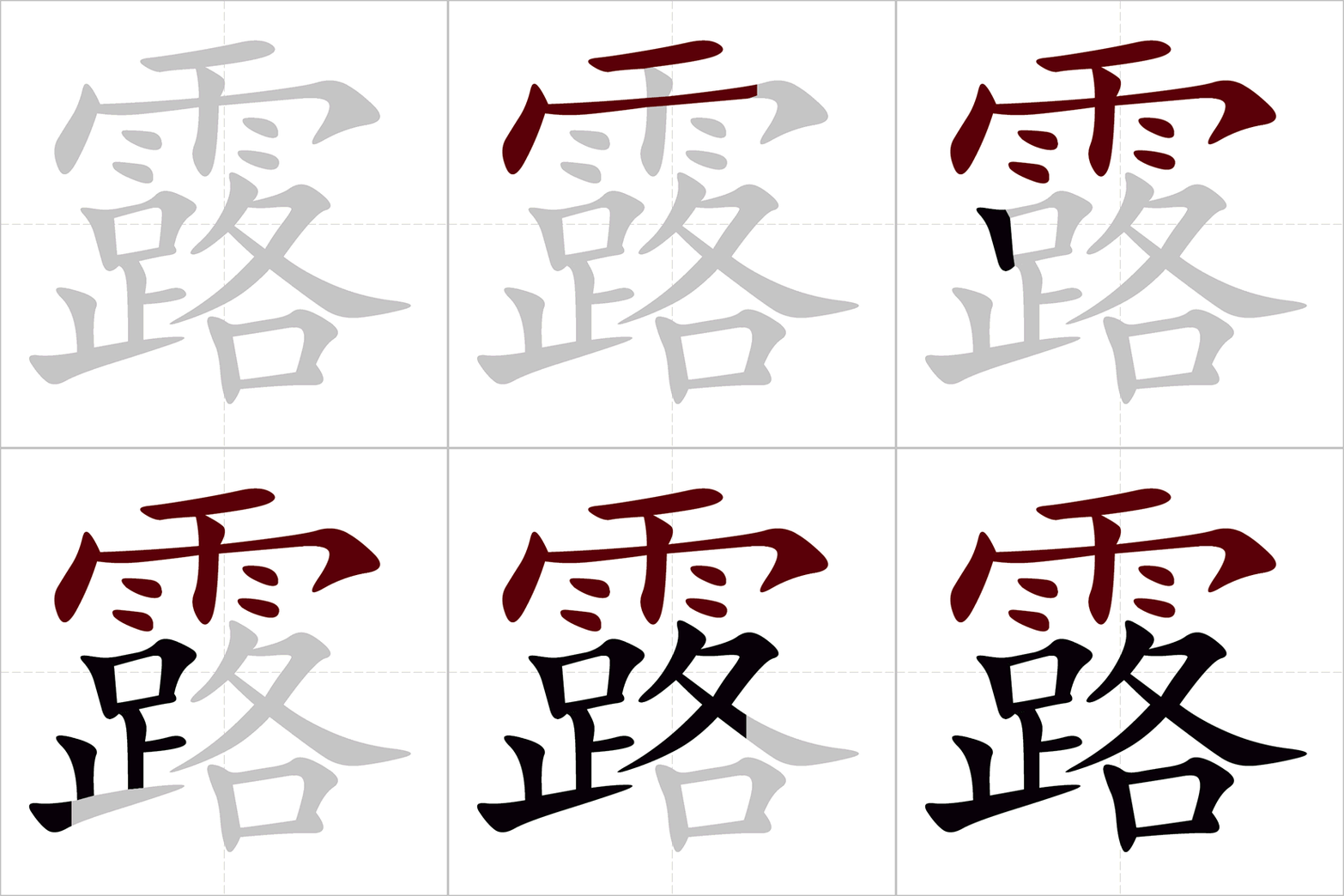
Usage and Nuance
The verb 流露 (liúlù) is used to describe the subtle or indirect revealing of emotions, thoughts, or attitudes. It often implies that the revelation is unintentional or unconscious, such as a fleeting expression or tone that betrays inner feelings.
Common Contexts
流露 is frequently used in literary or formal contexts to describe how someone's true feelings or thoughts emerge despite attempts to conceal them. It is often paired with words like 情感 (emotions), 表情 (expressions), or 话语 (words).
Collocations and Patterns
- 流露出 + 情感/表情/态度: to reveal emotions/expressions/attitudes
- 不经意地流露: to reveal unintentionally
- 流露出一丝 + 情绪: to reveal a trace of a certain feeling
Register and Tone
This word is relatively formal and more common in written Chinese or formal speech rather than casual conversation. It conveys a subtlety in the revelation of feelings, often highlighting the contrast between what is shown and what is hidden.
Common Confusion
Do not confuse 流露 with 透露 (tòulù), which means to disclose or reveal information more explicitly. 流露 emphasizes indirect or unconscious revelation, often emotional, while 透露 is more about explicit disclosure of facts or secrets.