
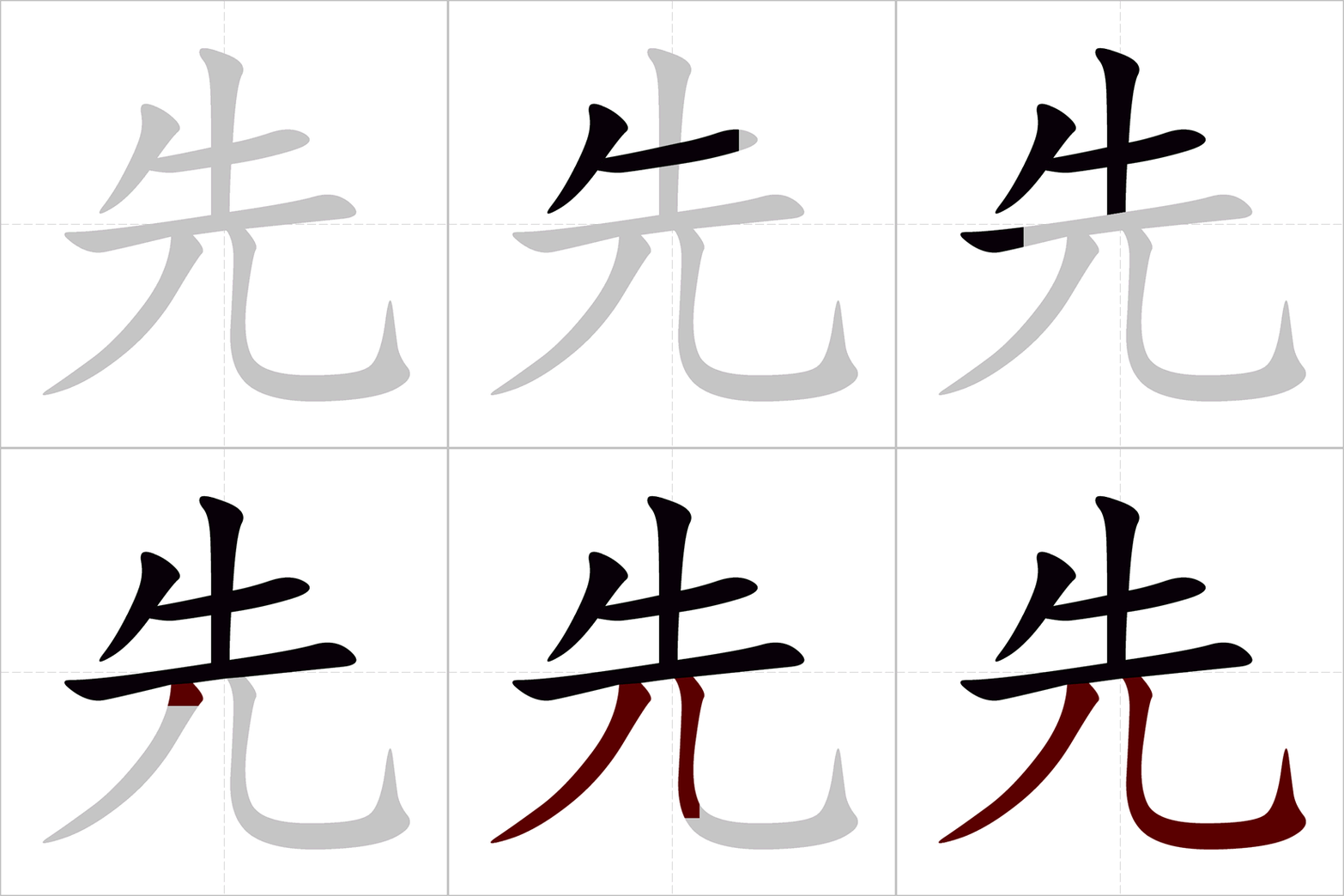
Meaning and Usage
The word "领先" (lǐngxiān) primarily means "to lead" or "to be in front," often used in contexts such as competitions, business, or technological advancements. It implies holding a position ahead of others either in time, rank, or progress.
Common Collocations
- 领先优势 (lǐngxiān yōushì): leading advantage, used to describe a competitive edge.
- 领先地位 (lǐngxiān dìwèi): leading position, often in market or rankings.
- 领先一步 (lǐngxiān yī bù): to be one step ahead, indicating a slight lead.
Usage Notes
When using "领先," the focus is on being ahead in a measurable way, such as time, score, or development. It is often used in formal or semi-formal contexts like business reports, sports commentary, or academic discussions.
Unlike similar verbs like "超过" (to surpass), "领先" emphasizes the ongoing state of leading rather than the act of surpassing itself.
Common Confusion
Do not confuse "领先" with "领先于," which explicitly states "leading over" someone or something. "领先" alone can be used as a verb or adjective, but adding "于" clarifies the comparison target.