
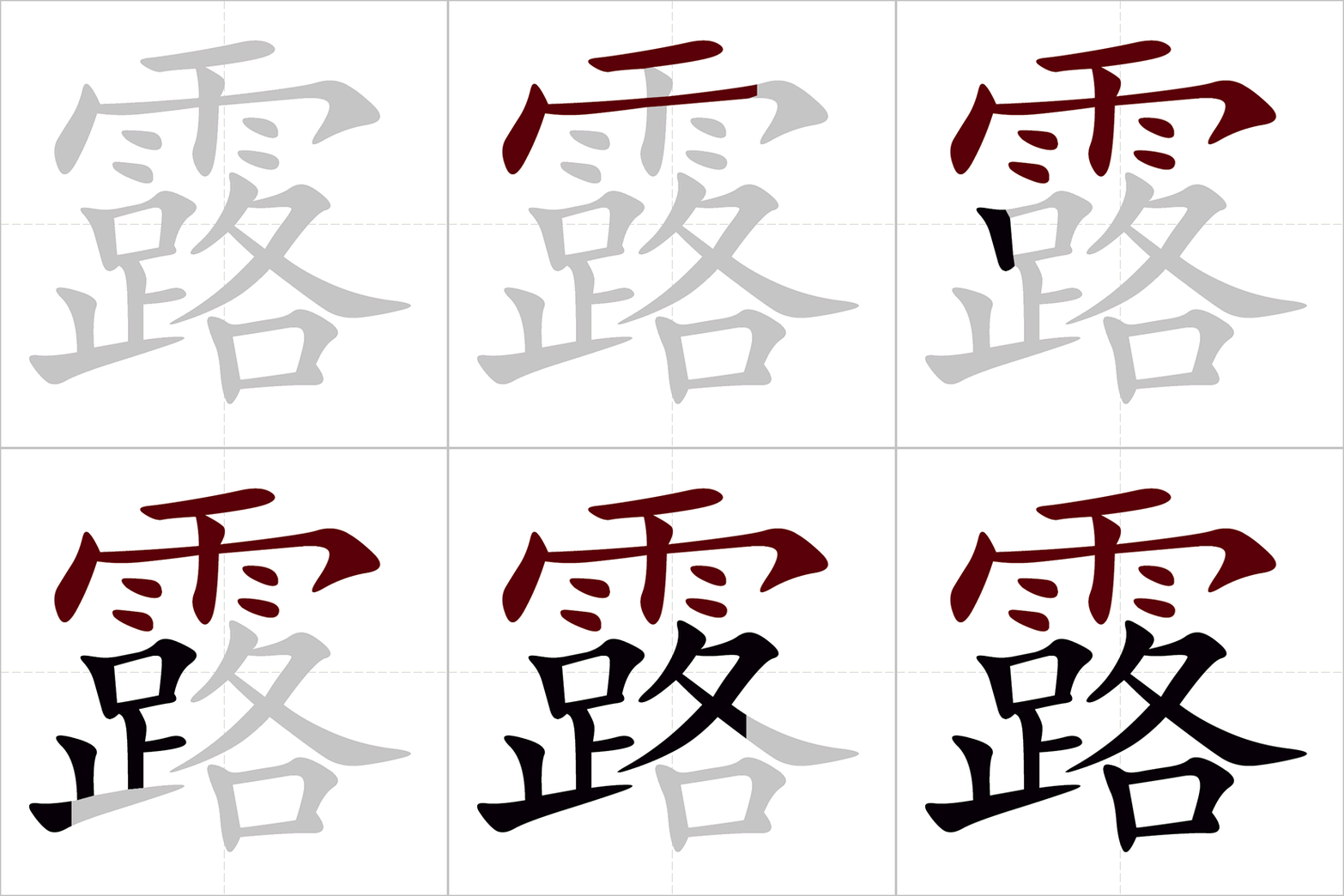
Usage and Nuances
The verb 泄露 (xièlòu) is commonly used to describe the act of leaking or divulging confidential information, secrets, or private data. It often carries a negative connotation, implying an unintended or unauthorized disclosure.
Common Contexts
You will frequently encounter 泄露 in contexts involving government secrets, corporate information, personal privacy, or media reports. It is often used in formal or serious situations.
Collocations and Patterns
- 泄露秘密 (xièlòu mìmì): to leak secrets
- 泄露信息 (xièlòu xìnxī): to leak information
- 泄露密码 (xièlòu mìmǎ): to disclose a password
These collocations emphasize the sensitive nature of the information being leaked.
Important Notes
Avoid confusing 泄露 with 漏 (lòu), which can also mean leak but is more general and can refer to physical leaks (like water). 泄露 specifically relates to information or secrets. When using 泄露, the focus is on the act of revealing something that should remain hidden.