

Meaning and Usage
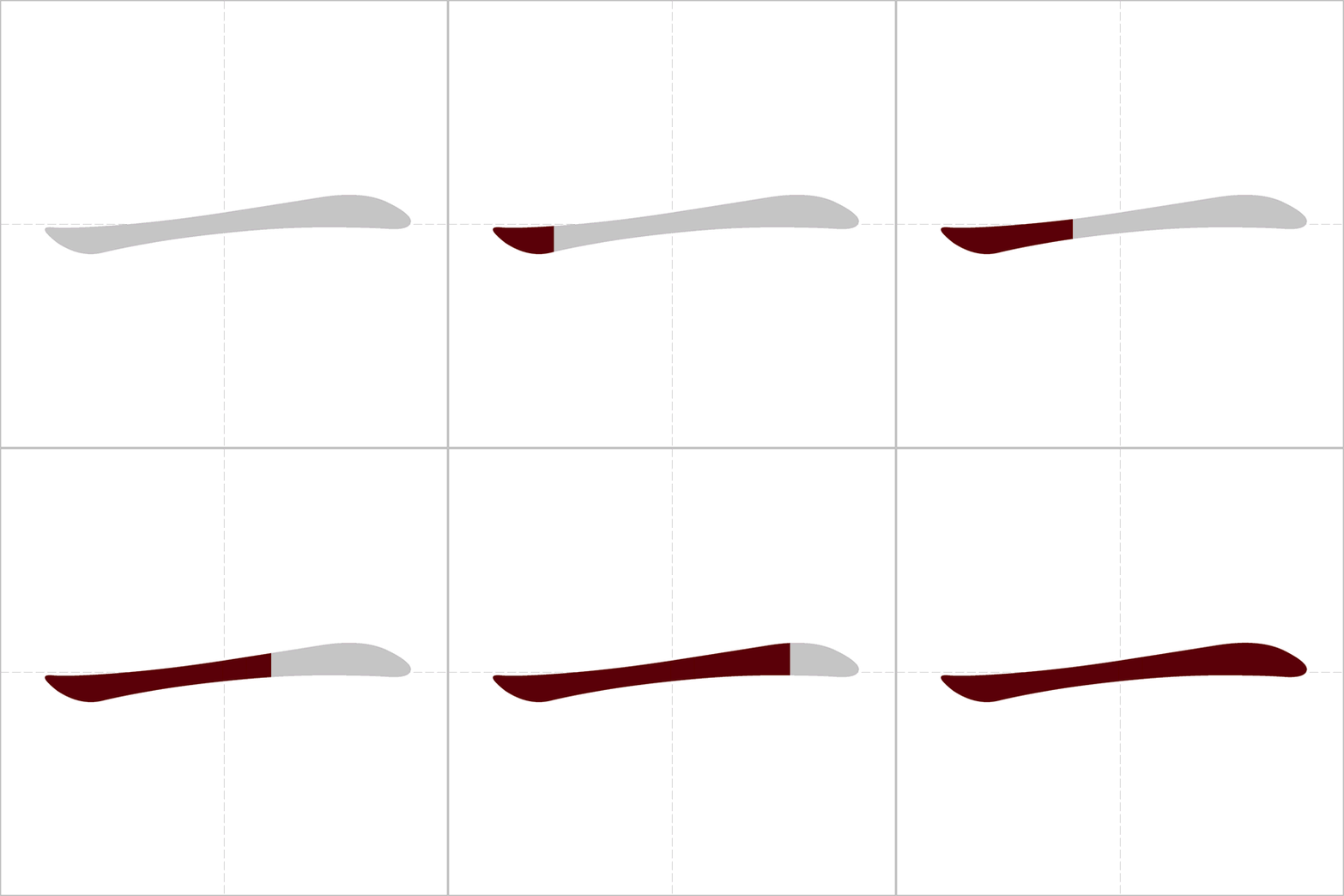
The phrase 一无所有 literally means "to have nothing at all." It is used to describe a state of complete lack of possessions, resources, or advantages. This expression often appears in contexts of hardship, loss, or starting from zero.
Common Contexts
You will often hear 一无所有 in stories about people facing difficulties, such as losing everything in a disaster or starting a new venture without any capital. It conveys a strong sense of emptiness or deprivation.
Collocations and Patterns
These collocations emphasize the total absence of possessions or resources.
Nuance and Register
This phrase is somewhat formal and literary, often used in written Chinese or serious speech. It carries a strong emotional weight, highlighting the extremity of having nothing. Avoid using it in casual contexts where a simpler phrase like 没有东西 (méiyǒu dōngxī) might suffice.
Common Confusion
Do not confuse 一无所有 with 没有 (méiyǒu), which simply means "not have." 一无所有 stresses the absolute absence of anything valuable or tangible, often with an emotional or dramatic undertone.